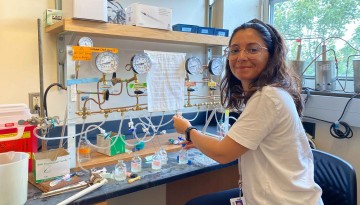
The three-year postdoctoral fellowship, granted to Lígia Fonseca Coelho and Zach Ulibarri, provides recipients with resources, freedom, and flexibility to conduct theoretical, observational, and experimental research in planetary astronomy.
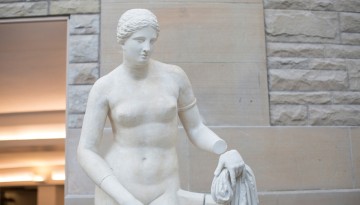
Sarah Morris, Steinmetz Professor of Classical Archaeology and Material Culture in the Department of Classics and the Cotsen Institute of Archaeology at UCLA, will deliver a trio of lectures on April 10, 12 and 15.
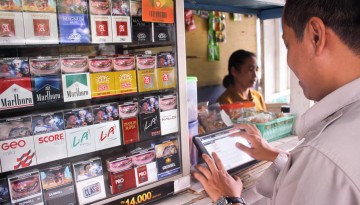
In a new book, anthropologist Marina Welker examines the staggering success of clove-laced tobacco cigarettes called “kretek” in Indonesia, the world’s second-largest cigarette market.
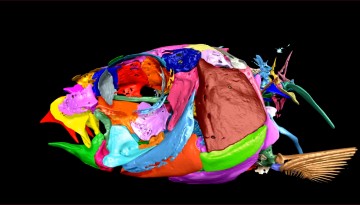
A venture to digitize vertebrate museum collections and make them freely available online for anyone to access has created 3D CT scans of some 13,000 specimens.
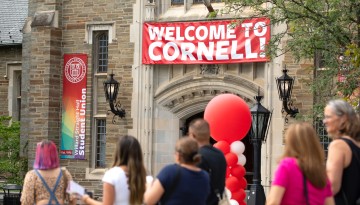
The 5,139 admitted students will bring with them a variety of lived experiences that will enrich the vitality and innovation of Cornell’s intellectual community.
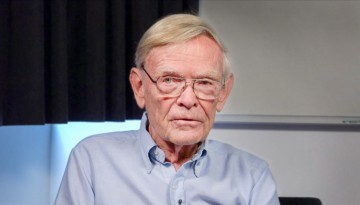
Richard “Dick” W. Conway ’54, Ph.D. ’58, a trailblazing professor who was instrumental in launching Cornell’s Department of Computer Science in 1965 – one of the first of its kind – died March 19. He was 92.
With the Intergroup Dialogue Project, instructors learned skills to facilitate in-class communication across difference – skills participants said are vital to maintaining a democratic society.
To woo a mate, the Albert’s lyrebird of Australia shakes entangled vines as part of his courtship footwork, synchronizing each shake with the beat of his striking song, according to new research.
Theda Skocpol, Harvard scholar and A.D. White Professor-at-Large at Cornell, will present the public lecture “Rising Threats to U.S. Democracy – Roots and Responses” on April 9.