One of the newest additions to Cornell’s Living Lab, the anaerobic digester will generate electricity and provide a real-world testbed for researchers across campus.
All life forms need to continuously adapt to temperature changes to survive. Now, Weill Cornell Medicine investigators studying a bacterial protein have identified a new mechanism of sensing cold temperatures.
Microbes that cause an infection remain biochemically active after they die, continuing to trigger a host’s immune system while also making the immune response less effective.
Even a temporary loss of trust in official data may be costly, with an economic impact many times the budgets of the agencies that report key indicators.
Presenters at the workshop explained how Cornell's Fred Young Submillimeter Telescope (FYST) promises a leap forward in our understanding of galaxy, star and planetary formation processes.
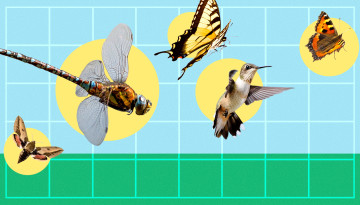
Researchers created a computational model that shows the effect of insects’ morphology on stabilizing their flight, which could provide a blueprint for designing flapping-wing robots.