The Cornell Atkinson Center for Sustainability and Environmental Defense Fund will distribute $1.24 million to 12 projects co-led by Cornell and EDF scientists for research addressing several sustainability topics.
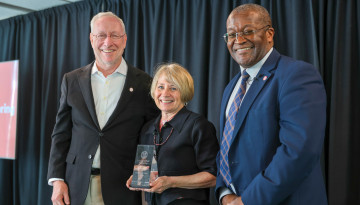
Beckie Robertson ’82, a venture capital leader in biotechnology, received the Cornell Duffield Engineering Distinguished Alumni Award on April 23 in recognition of a career defined by innovation in health care and service to Cornell.
Music streaming platforms such as Spotify hold tremendous power over whether fans listen to a musical artist, while social media boycotts have less impact, according to a new Cornell study.
Cornell researchers have discovered that a lethal variant of feline coronavirus, previously thought to be limited to a devastating 2023 outbreak in Cyprus that killed thousands of cats, has in fact appeared in the United States, raising concerns about future large-scale outbreaks in vulnerable cat populations.
Delaying hepatitis B vaccination after birth increases infections among newborns and decreases their survival rates and quality of life, according to a new study in JAMA Pediatrics.
Pamela Herd, a prominent sociologist from the University of Michigan, will come to Cornell at the end of this month to detail the broader public implications of administrative burden—from policy spaces to public understanding—including what it means to be a public sociologist who directly engages policy to make government better.
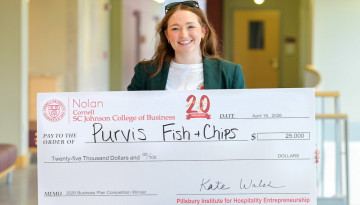
Master’s student Avery Sheppard won $25,000 to put toward her fish and chips eatery by winning the Nolan School’s hospitality business plan competition, held April 18 in Statler Auditorium.
Black Student Empowerment, in the Centers for Student Equity, Empowerment and Belonging, has received the annual James A. Perkins Prize for Interracial and Intercultural Peace and Harmony.