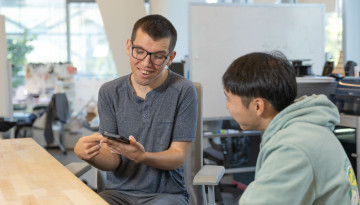
Ultra-personalized AI for assisted communication risks muting aspects of the user’s identity and can breach privacy, according to a study from a Cornell Tech doctoral student who trained the technology on himself.
Two faculty members in the College of Arts and Sciences – astronomer Martha Haynes and literary scholar Caroline Levine – have been named to the American Philosophical Society.
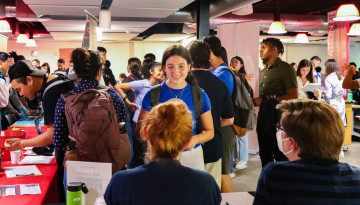
Thirty student startups received Human Spirit, Beck Fellows and Cane Entrepreneurial Scholars awards this summer from Entrepreneurship at Cornell, funding that will allow students to work on their startups rather than take traditional summer positions.
To mark the 1,000th episodeand the expansion of the program focus, WHCU and Cornell are rebranding the program as All Things Local, reflecting its evolution over 19 years and allowing for continued exploration of community-centered stories.
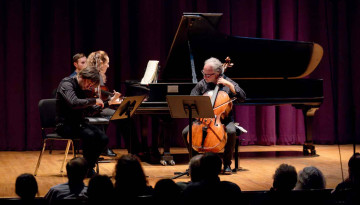
After a two-year break, music faculty are bringing back Mayfest, featuring a new commission by Cornellian Joseph Phibbs, a tribute to his teacher, Steven Stucky.
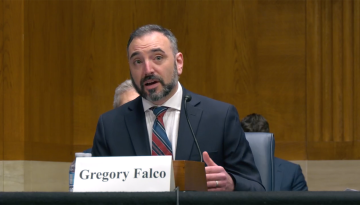
Assistant professor Greg Falco testified before the congressional U.S.-China Economic and Security Review Commission about how low-level data can be leveraged for tactical advantage.
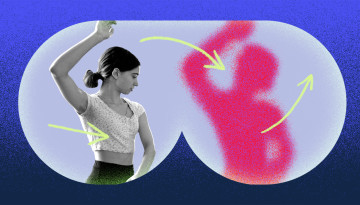
A Cornell doctoral student has helped develop a tool, DanXeReflect, that lets dancers use video and extended reality headsets to create an immersive environment for analyzing and refining their movements.
City and regional planning doctoral students Manoel Pereira Neto and Gauri Nagpal were selected as two of 50 Mellon/American Council of Learned Societies (ACLS) Dissertation Innovation Fellows.