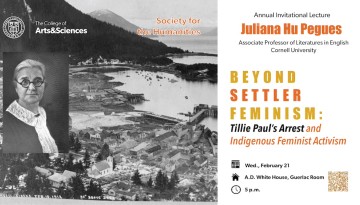
In this year’s Invitational Lecture hosted by the Society for the Humanities, Hu Pegues will examine the story of Tillie Paul, a Tlingit woman in Alaska.
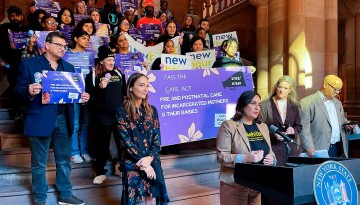
Students from the Brooks School’s State Policy Advocacy Clinic have teamed up with lawmakers and a community-based nonprofit representing formerly incarcerated mothers to introduce new legislation that would protect the rights of pre- and postnatal women in prisons and jails across New York.
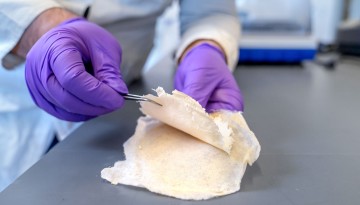
An interdisciplinary team of Cornell researchers has identified an innovative way to harness the antioxidant and antibacterial properties of the botanical compound lawsone to make nanofiber-coated cotton bandages that fight infection and help wounds heal more quickly.
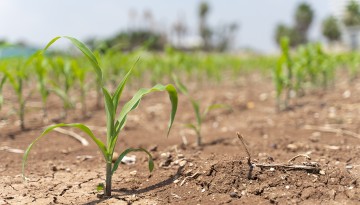
While New York’s farmers face more extreme weather events, they are learning to adapt, says a new statewide climate impacts assessment, led and written by two Cornell researchers.
Outside of the token skate park, the diverse needs of New York state teens are often ignored when planners design public spaces. A new collaboration between a College of Human Ecology professor and Cornell Cooperative Extension seeks to put an end to that.
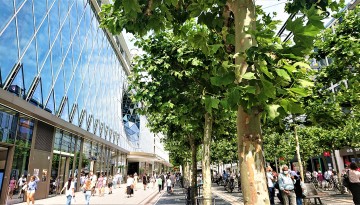
“Polycentric” development patterns can mitigate the urban heat island effect by distributing urban density and curbing the sprawl of impervious surfaces, a Cornell analysis finds.
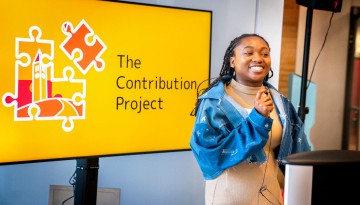
Applications are open for the Contribution Project, a program that grants $400 each to undergraduates with ideas for how to make a difference in the world.