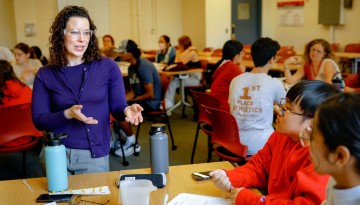
An endowed professorship, made possible with a gift from George Stephen Irwin ’67, M.Eng. ’68, is dedicated to engineering education research. Allison Godwin, associate professor in the Smith School, will be the first to hold the professorship.
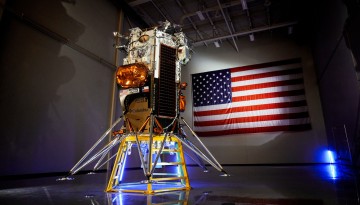
With the help of a Cornell researcher, the first radio telescope ever to land on the moon will lay the foundation for detecting habitable planets in our solar system by observing Earth as if it’s an exoplanet.
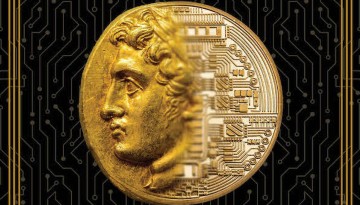
A confluence of events, combined with a healthy obsession for details and a love of writing, gave Cornell Tech computer scientist Ari Juels just what he needed to produce his second fiction thriller, “The Oracle.”
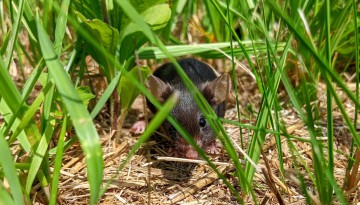
Cornell researchers have found that when laboratory mice are placed in large outdoor enclosures, male behavior was essentially the same as genetically wild mice, but females displayed radically different behaviors.
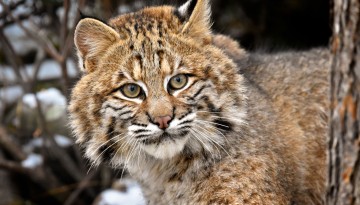
With thousands of strategically placed cameras covering more than 27,000 square miles in central and western New York, Cornell biologists show that bobcat populations remain critically low.
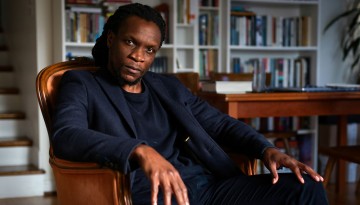
In the new book-length work, “School of Instructions: A Poem,” Ishion Hutchinson writes of the psychic and physical terrors of West Indian soldiers volunteering in British regiments in the Middle East during World War I.
Research involving animal models – for purposes such as developing new vaccines or regenerative medicines – generally employ mice, but new Cornell research has identified another species that could be valuable in this type of work.
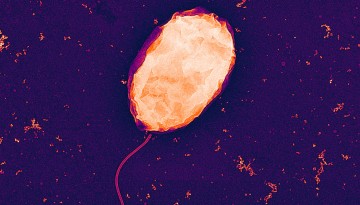
To conduct low-cost and scalable synthetic biological experiments, Cornell researchers have created a new version of a microbe to compete economically with E. coli – a bacteria used to synthesize proteins.
New research provides educators, mental health practitioners and youth-serving organizations with a blueprint for co-creating spaces where Black girls feel seen, heard and honored.