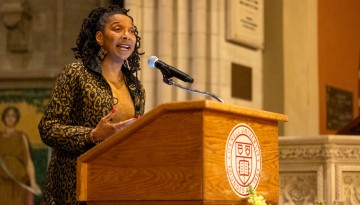
Kimberlé Crenshaw ’81, a legal scholar, reflected on the ways Dr. Martin Luther King Jr.’s influence shaped her personal, academic and professional journey.
Hero of Alexandria's writings on things like pneumatics, pure geometry and catapults have influenced many through the ages and his principles touch early modern inventions including the player piano and the fire engine.
A hostile environment that threatens Latino noncitizens with deportation is associated with psychological distress among not only Latino noncitizens but also Latino U.S. citizens who aren’t vulnerable to deportation, a Cornell-led research group found.
J. Robert Lennon’s “weird hike through the wilderness” of publishing has led him to a new and unexpected place: writing his first thriller, “Hard Girls,” published Feb. 20 by Mulholland Books.
The Baker Program is proud to announce two new developments that enhance the value of its MPS-RE degree and open it up to students from a broad range of backgrounds.
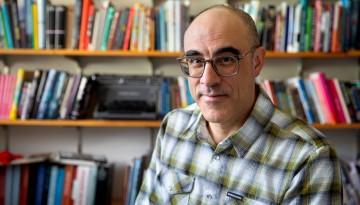
Assistant professors Anna Y.Q. Ho, Chao-Ming Jian, Rene Kizilcec and Karan Mehta are among 126 early-career researchers who have won 2024 Sloan Research Fellowships from the Alfred P. Sloan Foundation.
The 2024-2025 Cornell Center for Social Sciences (CCSS) faculty fellows represent seven Cornell schools and colleges. Fellows will tackle urgent social issues such as online misinformation, pay transparency laws and the impact of government support on clean energy innovation.