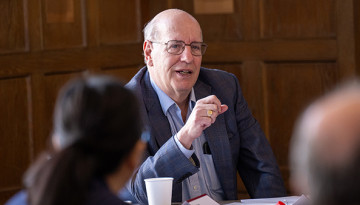
Harry Katz, the Jack Sheinkman Professor of Collective Bargaining at the School of Industrial and Labor Relations, was honored at a conference the weekend of April 11-12 as fellow scholars, colleagues and mentees presented papers that draw on his work by extending the context in which his insights are applied, his methods used and theoretical assumptions made.
María Cristina García, professor of history and American studies in Cornell's College of Arts & Sciences, has received a Lifetime Achievement Award from the Immigration and Ethnic History Society.
Weill Cornell Medicine investigators have revealed the detailed workings of a cell membrane protein; the discovery could lead to new therapies for blood coagulation disorders, cancers and other conditions.
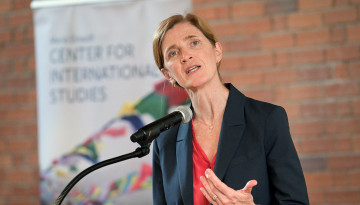
Behavioral health clinicians at 911 call centers answer mental health and substance abuse calls, enabling police officers to spend more time focusing on public safety.
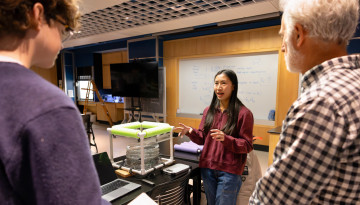
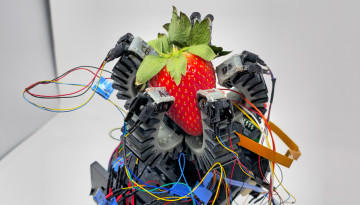
Cornell researchers used stretchable fiber-optic sensors to create a soft robot gripper that can predict the ripeness of strawberries by touch, then pick them without causing any damage.