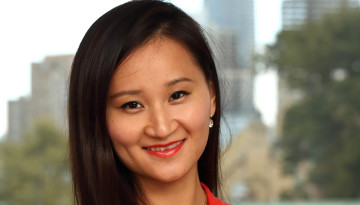
Kate A. Manne, professor of philosophy, and Leeza Meksin, assistant professor of art, have been named 2026 fellows by the John Simon Guggenheim Memorial Foundation.
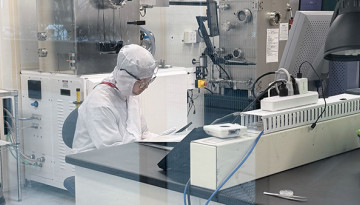
The NSF Energy Storage Engine in Upstate New York, an initiative led by Binghamton University with Cornell serving as a core partner for technology translation, has secured $45 million in renewed funding for the next three years.
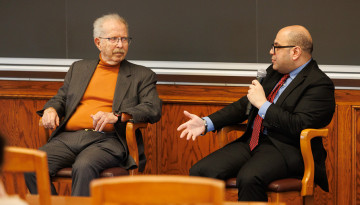
Adjunct professorsMohamed ‘Arafa and Menachem Z. Rosensaft discussed the urgency of discourse between the intertwined communities April 14 at Cornell Law School.
Plants adjust to temperature changes, in part, by switching the way they express Rubisco, the protein that performs the critical first step of photosynthesis, according to new research from Cornell and partners.
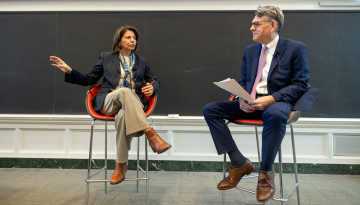
Laura Chinchilla, the former president of Costa Rica, warned an audience of Cornell students that global democracy is undergoing a “great reversal,” citing rising authoritarianism, weakening elections and declining public trust in democratic institutions.
Artificial intelligence is touching nearly every aspect of life, including assistive technology for vision-impaired individuals. And just like in other arenas, the AI used to assist them is good, but far from perfect.
Conversational AI tools denied blunt requests for harmful content by researchers posing as intimate partner abusers, but these guardrails were easily circumvented, a new Cornell Tech study has found.