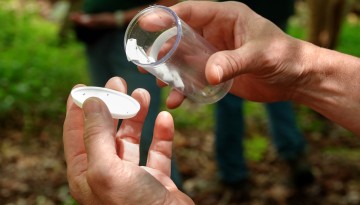
Researchers are hoping a fly no larger than a grain of rice and a predatory beetle may work together to combat an invasive pest that is devastating hemlocks in Fall Creek and throughout eastern North America.
Cornell researchers have successfully transferred key regions of a highly efficient red algae into a tobacco plant to dramatically improve plant productivity and increase carbon sequestration.
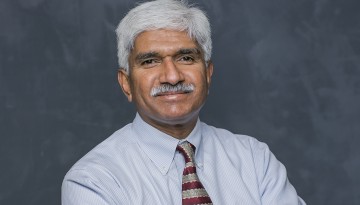
Srinagesh Gavirneni, professor of operations, technology and information management, an expert in supply-chain information sharing and a beloved mentor to students and junior faculty, died unexpectedly in Ithaca.
Anna Y. Q. Ho and others chosen will pursue science investigations that will contribute to Israel’s first space telescope mission, planned to launch into geostationary orbit around Earth in 2026.
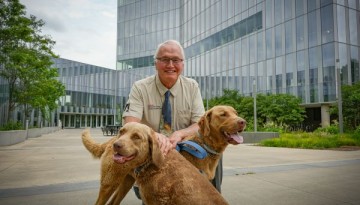
Trustee emeritus and Central New York farmer Robert “Bob” Bitz ’52, a longtime supporter of the university who was instrumental in helping organize Cornell’s first advisory committee on planned giving, died June 17. He was 92.
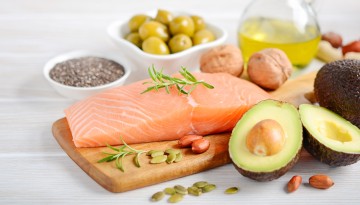
A Cornell-led study provides the strongest evidence yet that omega-3 fatty acids, which are abundant in fish and fish oil supplements, may be important for lung health.
An interdisciplinary research team received a five-year, $2 million grant from the National Science Foundation to develop a new generation of biosynthetic lubricants that have the potential to treat arthritis and reduce the painful friction of artificial joints.
Using an innovative method for measuring doctor turnover, Weill Cornell Medicine researchers determined that between 2010 and 2018, the annual rate at which physicians left their practices increased by 43%, from 5.3% to 7.6% a year.