LinkedIn introductions that emphasize a professional “journey” rather than listing achievements make a stronger positive impression, according to new Cornell research.
In their project, “Mostly Harmless Statistical Decision Theory,” three Cornell economists in A&S will develop innovative methods for data-driven policy choices.
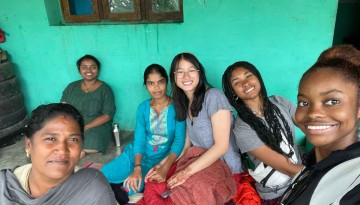
Denise Rose worked with other Cornell students on a study of mental health in India through the Cornell-Keystone Nilgiris Field Learning Summer Program.
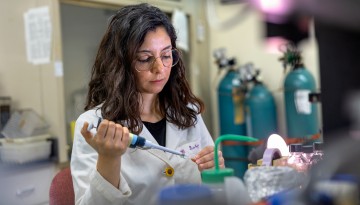
In a fast-fashion, throw-clothes-away world, textile expert Juan Hinestroza (Human Ecology) and a group of scientists have new ways to recycle wasted polyester into new useful products.
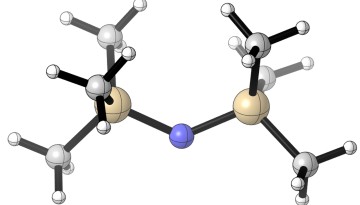
Cornell researchers attached large fragments to temperamental "radical" molecules, increasing their girth to insulate them from their hyperreactive partners – a method that could help create improved derivatives of pharmaceutical compounds.
Researchers sent a menstrual cup to space to test if it was safe for menstruating astronauts to use, which could be especially useful on longer missions to Mars or the moon.
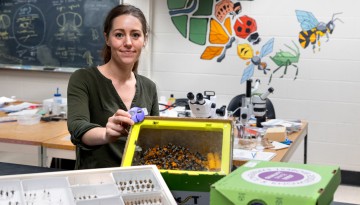
A Cornell study that revealed commercial eastern common bumblebee hives pose a threat to their wild counterparts has led one major pollination company to quickly adapt the bumblebee hive boxes they ship to growers.