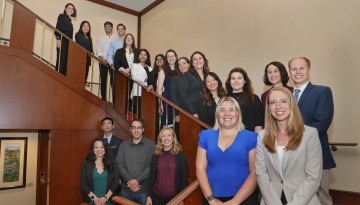
The summer 2023 Colman Inclusive Leadership Program helped 28 doctoral students enhance their leadership skills through readings, group activities, case studies and discussion about practical skills and leadership theories.
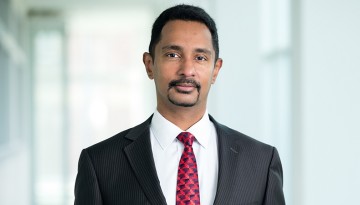
Ray Jayawardhana, the Harold Tanner Dean of the College of Arts and Sciences, has been named provost of Johns Hopkins University in Baltimore. Astronomy professor Rachel Bean has been named interim A&S dean, effective July 13.
The Lab of Ornithology’s visitor center will close for 10 months beginning Aug. 1 for a multimillion-dollar redesign that will add new hands-on exhibits and visitor offerings.
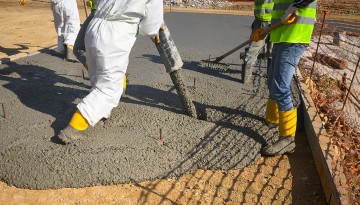
Greeshma Gadikota, associate professor of engineering, has gathered a team to help capture carbon dioxide in the concrete-making process as they aim to create low-carbon construction materials from it.
In a new book, landscape architect Martin Hogue investigates the history and evolution of recreational camping through the lens of its most important and familiar components.
Filmmakers may soon be able to stabilize shaky video, change viewpoints and create freeze-frame, zoom and slow-motion effects – without shooting any new footage – thanks to an algorithm developed by researchers at Cornell University and Google Research.
Researchers have built a new, interpretable machine-learning framework that captures stock- and industry-specific information and predicts financial returns with greater accuracy than traditional models.