Can serendipity be “harnessed?” Researchers think that reflecting on unintended outcomes, both positive and negative, can lead to more and better ideation.
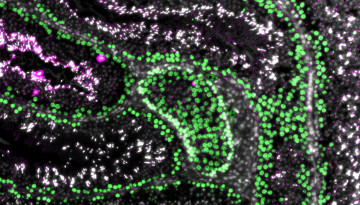
A proof of principle study in mice, six years in the making, shows how targeting a natural checkpoint in meiosis, the process by which sex cells reproduce, safely stopped sperm production.
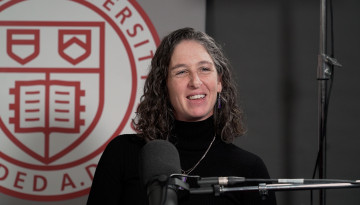
Elisha Frye, D.V.M. ’10, explains how Cornell’s Animal Health Diagnostic Center works at the front lines of detecting and preventing diseases that can jump between animals and humans.
A team of geophysicists from Cornell, Cameroon and South Africa is using machine learning tools to unearth new information from earthquake data collected by Cornell 15 years ago – providing a lifeline for a scholar whose career was upended by conflict.
The first phase of the university’s upcoming reaccreditation process is underway, with the naming of a steering committee and an invitation to the community to provide input.
A new study finds that the global shift to electric vehicles could significantly reduce energy use and carbon emissions, but only if governments act aggressively to lower costs and align policies across regions.