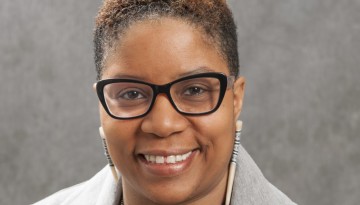
Cornell nutrition expert Angela Odoms-Young will serve as the vice chair of the national 2025 Dietary Guidelines Advisory Committee, which will review scientific evidence regarding federal nutrition programs and policies and provide nutritional guidelines for all Americans.
First-of-their-kind observations reveal new details about melting at the grounding line of the vulnerable Thwaites Glacier that is contributing to its retreat and potentially to sea-level rise, according to Cornell researchers and international collaborators.
Stanford University’s Richard T. Ford delivered the annual lecture, focusing on the lack of difficult discussions on generations of race-based exclusion and exploitation.
Assistant professors Eshan Chattopadhyay, Debanjan Chowdhury, Andrew Musser, Angeline Pendergrass and Andrej Singer have won 2023 Sloan Research Fellowships from the Alfred P. Sloan Foundation.
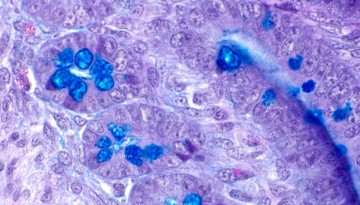
Metal oxide nanoparticles – commonly used as food coloring and anti-caking agents in commercial ingredients – may damage parts of the human intestine, say Cornell and Binghamton University scientists.
Materials scientists at Cornell have developed a method for better understanding the complex electrochemical reactions that occur at the interface of water and metal surfaces – an approach that will ultimately lead to better fuel cells and other electrochemical technologies.
The Scialog initiative aims to catalyze advances in basic science that will enable technologies for removal of C02 and other greenhouse gases to become more efficient, affordable and scalable.
To help identify when tense online debates are inching toward irredeemable meltdown, Cornell researchers have developed an artificial intelligence tool that can track these conversations in real-time, detect when tensions are escalating and nudge users away from using incendiary language.