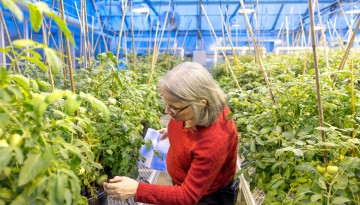
A Cornell researcher has completed a decades-long program to develop new varieties of tomato that naturally resist pests and limit transfer of viral disease by insects.
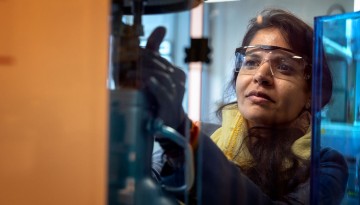
A Cornell engineering professor will play a major role in a new federally funded project to increase the domestic supply of minerals needed to improve and sustain green energy.
New Cornell research shows how the rise of consumers’ influence changed the tune of contemporary country music and led to the creation of more songs that span multiple genres.
Cornell researchers found that visual depictions of food pantry offerings, including brand names, have an ameliorative effect on negative product perceptions.
The Sierra Duo – John Haines-Eitzen, cello, and Matthew Bengtson, piano – will perform Sierra’s “Cuatro Piezas para cello y piano” and other pieces Jan. 29.
On Feb. 7, Cornell's Center for Advanced Computing (CAC) and Weill Cornell Medicine Scientific Computing, ITS, and Clinical and Translational Science Center will roll out the 2023 Scientific Computing Training Series.
A new interdisciplinary, low-residency graduate program welcomes new faculty integrating critical engagement and creative practices across image and text.
Using artificial intelligence, Cornell engineers have simplified models that accurately gauge the fine particulate matter in urban air pollution – exhaust from cars and trucks that get into human lungs.
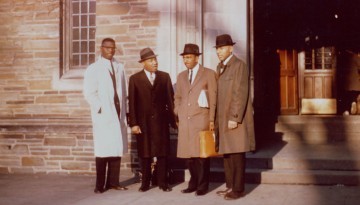
Martin Luther King Jr.’s historic visits to Cornell on Nov. 13, 1960, and April 14, 1961, came at a pivotal point in his life and in American political and social history.