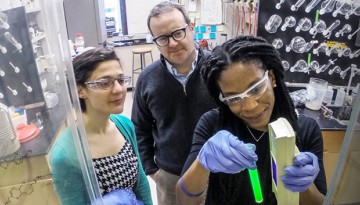
Geoffrey Coates’ discoveries have revolutionized polymer recycling, materials for green hydrogen generation, and the synthesis of sustainable plastics.
Forte Protein – a new Cornell startup that grows commercial animal proteins inside agricultural plants – has joined the university’s Center for Life Science Ventures business incubator.
The Klarman Postdoctoral Fellowship program in Arts and Sciences has been expanded to 10 fellows per cohort and extended by five years, thanks to additional significant support from Seth Klarman ’79 and Beth Schultz Klarman.
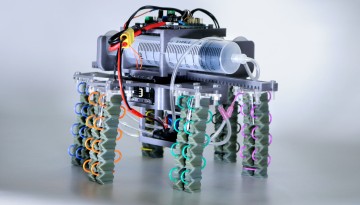
Researchers designed a new system of fluid-driven actuators that enable soft robots to achieve more complex motions, leveraging the very thing – viscosity – that had previously stymied their movement.
Cornell professor Robert Howarth advised New York state senators last week to downsize the state’s natural gas pipeline system and to repeal laws that easily connect gas to new homes.
An innovative Cornell-led survey paints a comprehensive picture of what Americans were thinking on Election Day in 2022 – and advances the science of surveys.
Of the 28 teams that eLab welcomed in the fall, 11 student startups will continue on to the spring semester. To allow a wider net to be cast in identifying which businesses show the most promise, eLab’s structure took a new form in 2022-23.
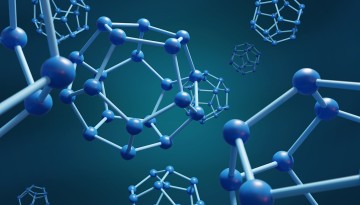
A Cornell-led collaboration has for the first time used voltage to turn on and off a material’s crystal symmetry, thereby controlling its electronic, optical and other properties – a discovery that could have a profound impact on building future memory and logic devices.