New tools and methods that enable the visualization and quantification of phosphate content in plants at the single-cell level could help agricultural researchers understand how crop plants use this important nutrient.
A new model can help online media companies figure out what gives users long-term satisfaction – not just the instant gratification of continual scrolling – which may result in less time spent on the platform, but fewer users who quit entirely.
More than 180 young people from across New York state and the Philadelphia area got a taste of campus life and future career paths during the annual 4-H Career Explorations Conference, June 28-30.
Dan Aneshansley, Ph.D. ’72, professor emeritus of biological and environmental engineering, whose research impacted the state’s dairy and fruit production, died July 3. He was 79.
The growth of “green” building and energy efficiency initiatives has been accelerating, but it's not the ideal solution. By reusing the existing built environment, sustainable preservation is an essential tool for meeting climate goals.
Specialty crop entomologists from Cornell AgriTech and the New York State Integrated Pest Management Program will use a three-year, $450,000 grant from the New York State Department of Agriculture and Markets to evaluate alternatives for controlling insect pests that threaten the state’s $1.4 billion specialty crop industry.
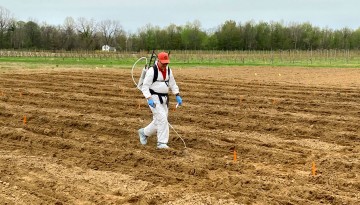
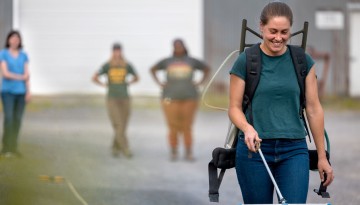
For the students on the Cornell Weed Team, who face endless marijuana wisecracks from nonscientists, competing in the Northeastern Weed Science Society’s tournament in Guelph is no joke.
Cornell researchers have developed a wearable earphone device – or “earable” – that bounces sound off the cheeks and transforms the echoes into an avatar of a person’s entire moving face.
A new study demonstrates for the first time that the same undersea fiber-optic cables used for internet and cable television can be repurposed to tune in to marine life at unprecedented scales, potentially transforming critical conservation efforts.