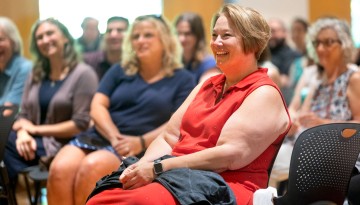
For her heroic efforts to get students enrolled virtually during the fall 2020 pandemic semester – and after 26 1/2 years at Cornell – Lisa M. Clark, the inaugural deputy university registrar in the Office of the University Registrar (OUR), has won the 2022 George Peter Award for Dedicated Service.
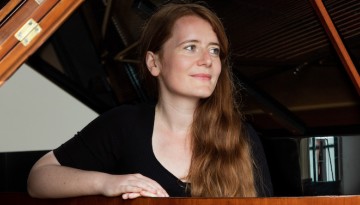
Young artists from around the world will be immersed in one of the world’s most significant collections of performance-ready historical pianos, with performances open to the public August 1-6.
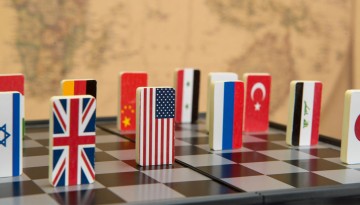
Once used as a tool for constitutional reform, Congress has repurposed Article V of the U.S. Constitution into a mechanism for taking positions on issues, according to new Cornell research.
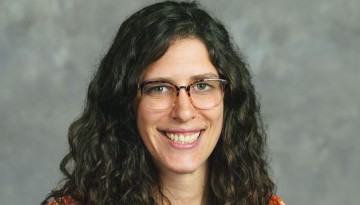
Dr. Corinna Noel, assistant professor of practice in the Department of Public and Ecosystem Health, recently joined the College of Veterinary Medicine.
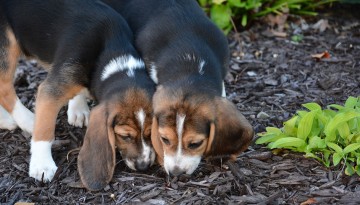
Cornell researchers have provided the first documentation that dogs’ sense of smell is integrated with their vision and other unique parts of the brain, shedding new light on how dogs experience and navigate the world.
Water resources will fluctuate increasingly and become more and more difficult to predict in snow-dominated regions across the Northern Hemisphere by later this century, according to a new study.
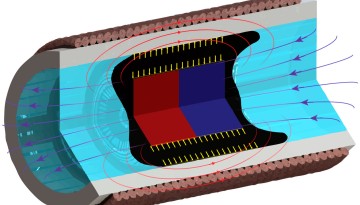
A collaboration between Cornell researchers and the U.S. Army Research Laboratory has leveraged hydrodynamic and magnetic forces to drive a rubbery, deformable pump that can provide soft robots with a circulatory system, in effect mimicking the biology of animals.