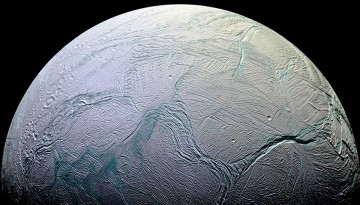
Over the next 10 years, the nation’s top planetary scientists are proposing exploratory voyages to the frigid, distant solar-system planet Uranus and the icy Saturnian moon Enceladus.
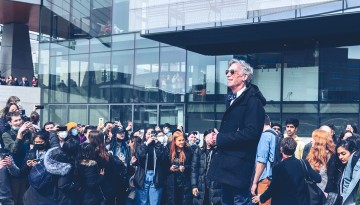
Launched by the Office of Global Learning (OGL), the story circles initiative is intended to bridge the gaps in intercultural understanding between Cornell’s international and domestic populations.
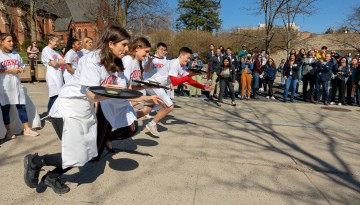
A yearlong celebration of the 100th anniversary of the Cornell Peter and Stephanie Nolan School of Hotel Administration kicked off at the 97th annual Hotel Ezra Cornell, the school’s signature student-run conference and hospitality event, which was held April 21-24.
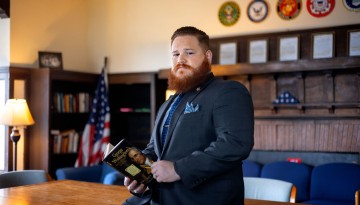
As a student at Cornell and president of the Cornell Undergraduate Veterans Association, Roland Molina ’22 has dedicated himself to advocating for student veterans and strengthening the veteran community on campus.
Swelling colloids – mixtures, such as milk and paint, in which particles are suspended in a substance and which can grow up to 100 times larger under certain temperatures – could be used to fix flow pathways in underground geothermal systems, a problem that has hobbled investment in geothermal energy.
A sophomore and a two juniors have won Goldwater Scholarships, the top undergraduate award for students pursuing careers in mathematics, the natural sciences and engineering.
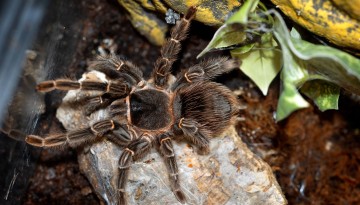
A survey has found that endangered and threatened insects and spiders, as well as common species that provide valuable ecological services, can be easily purchased – without adequate oversight – through basic internet searches, according to a new Cornell study.