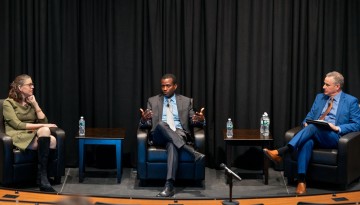
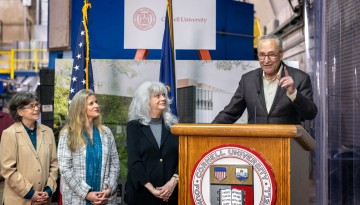
The kinds of speech that should, and should not, be allowed on social media platforms – and who should make such distinctions – were discussed by a journalist and law professor during the final installment of Civil Discourse: The Peter ’69 and Marilyn ’69 Coors Conversation Series, on April 14.
A new database allows users to search any U.S. ZIP code address to learn about extreme weather concerns like hurricane or wildfire exposure, and to find nearby problematic environmental sites.
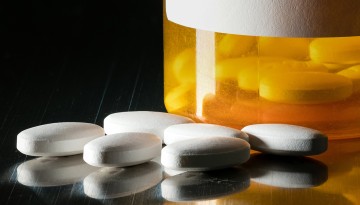
Legalization of recreational marijuana reduces demand for costly prescription drugs through state Medicaid programs, according to an analysis by a Cornell researcher and a collaborator.
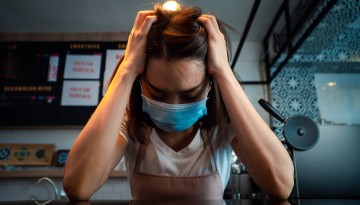
Variable work scheduling may provide short-term solutions to unpredictable market conditions, but can harm workers as well as business performance, new research suggests.
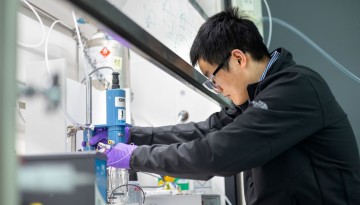
In making hydrogen a viable, clean-energy alternative to carbon-based fuels, Cornell and two research-startups have joined a consortium that aims to propose a Northeast research hub.
Upcoming Balance Festival aims to help students explore current choices and the alternatives available in a way that meets students where they are and recognizes the constraints they face.
A Cornell study describes a breakthrough in the quest to improve photosynthesis in certain crops, a step toward adapting plants to rapid climate changes and increasing yields to feed a projected 9 billion people by 2050.
The Cornell High Energy Synchrotron Source celebrated the groundbreaking for its new $32.6 million High Magnetic Field beamline – the facility’s latest milestone.
Eleven student groups including residence halls, student organizations, and Cornell athletics teams participated in the goal-breaking Ithaca Polar Plunge in late March to support the Special Olympics of New York.