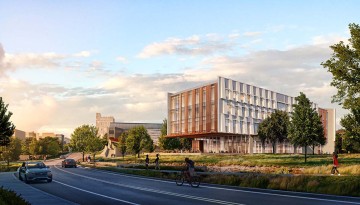
Construction is scheduled to begin in early 2023 on a state-of-the-art academic building for the Cornell Ann S. Bowers College of Computing and Information Science, to be built adjacent to Bill and Melinda Gates Hall on Hoy Road.
A new open-access book constitutes the most authoritative study on the future of local and global agri-food systems, exploring the challenges of today and envisioning potential food systems scenarios through 2070.
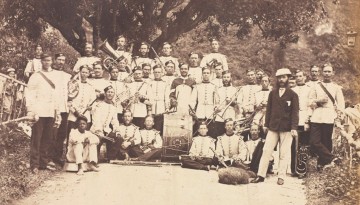
Medical statistics compiled and published by the British military played an important role in introducing “race” as a categorical reality, according to Professor Suman Seth.
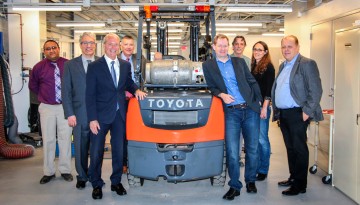
A new Forklift Learning Studio at Cornell will be used to elevate engineering education, turning the vehicles into interactive tools for studying thermofluids, modeling structural mechanics, and experimenting with control dynamics.
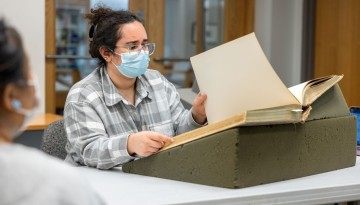
Throughout the spring semester, the inaugural RAD Public History Fellows have been digging deep into library archives and bringing their discoveries to light in creative ways – from social media posts to displays of artifacts and tours of library exhibits.
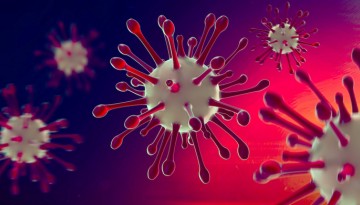
Cornell researchers have identified a shift that occurs in canine coronavirus that points to a possible pattern of change found in other coronaviruses and which may provide clues to how they transmit to humans from animals.
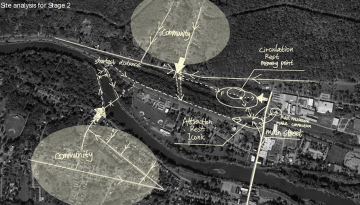
This semester, a compelling conversation across architecture, landscape architecture, and planning has been made possible through the collaborative strategies of three AAP studios focused around work in Salamanca, New York.
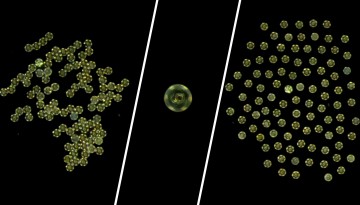
Researchers have developed collectives of microrobots - each slightly larger than a hair's width - capable of reconfiguring their swarm behavior to move in circles, bunch up into a clump, spread out like gas or form a straight line like beads on a string.