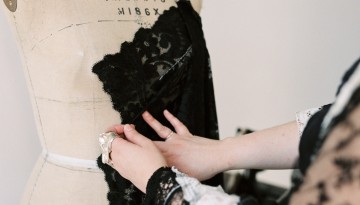
Mimi Prober will serve as designer-in-residence at the Jill Stuart Gallery from Oct. 13 to Nov. 9. She will meet with students, critique their work and exhibit her own. She will also create a new garment made from pieces that were slated to be retired from the Cornell Fashion + Textile Collection.
A new book, “In the Struggle: Scholars and the Fight Against Industrial Agribusiness in California,” by Scott J. Peters and Daniel J. O’Connell, weaves together the stories of eight scholar-activists who opposed agribusiness consolidation in California.
One year into the Engaged College Initiative, leadership from involved colleges, staff from the David M. Einhorn Center for Community Engagement and community engagement experts discuss progress so far and future plans.
Their projects served communities across New York, from improving soil at community farms in New York City to developing an anti-racism curriculum for Hudson Valley teens.
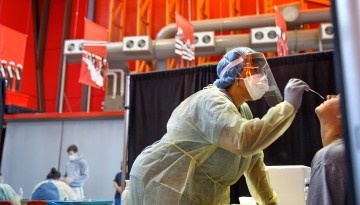
A limited number of fully vaccinated students with breakthrough but asymptomatic COVID-19 infections will be able to test out of their mandatory 10-day isolation periods early after receiving two negative tests.
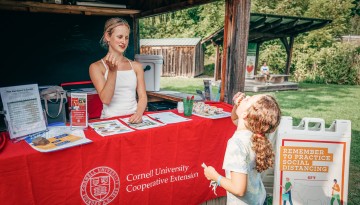
A recent study brought together Cornell students and faculty and New York City teenagers to explore how nutrition education can improve nutrition and promote positive youth development in places with little or no access to healthy, affordable food.
David Russell, the William Kaplan Professor of Infection Biology in the Department of Microbiology and Immunology, has been awarded a $2 million grant from the Mueller Health Foundation to develop new treatment regimens for tuberculosis.
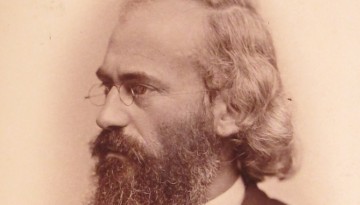
The life and work of James Edward Oliver, a passionate supporter of women’s suffrage and a nationally recognized mathematician, will be celebrated in an evening of talks on Oct. 14.