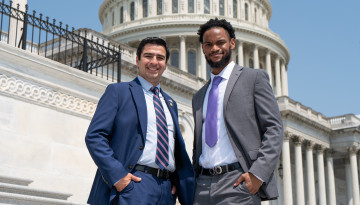
Christian Gant-Madison's '25 platform will use AI to connect youth to jobs, skill development opportunities, civic education information and social resources.
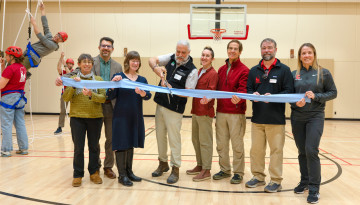
Members of the Cornell community and the Tompkins County Chamber of Commerce came together Feb. 10 to celebrate the opening of a new indoor adaptive challenge course at the Noyes Community Recreation Center.
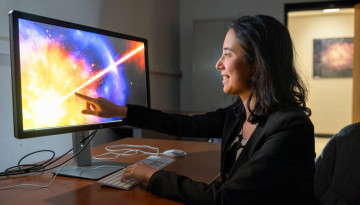
With a proposal titled “Fast Transients: Revealing the Diversity of Relativistic Stellar Explosions,” Ho is one of 24 early career scholars in chemistry, physics and astronomy each receiving $120,000 for proposals incorporating research and science education.
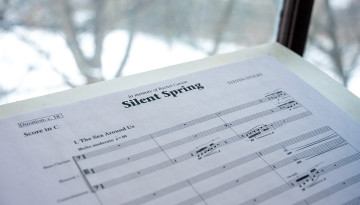
A multimedia Cornell University Library exhibition, demonstrating how music can be a powerful vehicle for raising environmental awareness, opens Feb. 20 at the Sidney Cox Library of Music and Dance.
Two professors who won a prize for their paper on artificial intelligence and conspiracy theories are among several faculty members recently honored for their work.
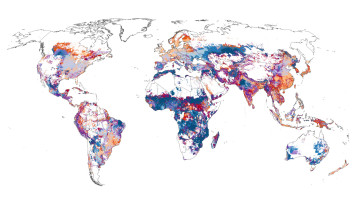
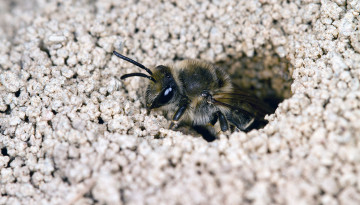
Five new projects from the Cornell Atkinson Center for Sustainability and The Nature Conservancy seek to protect pollinators, restore oyster habitats, manage flood risk and support “cattlevoltaics.”
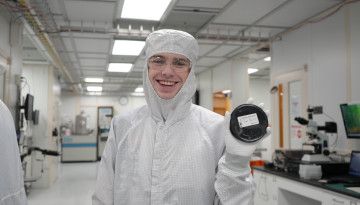
High school seniors from Tompkins-Seneca-Tioga BOCES stepped into the cleanroom at Cornell’s Cornell NanoScale Science and Technology Facility this January, trading classroom labs for hands-on experience in one of the nation’s most advanced university nanofabrication facilities.