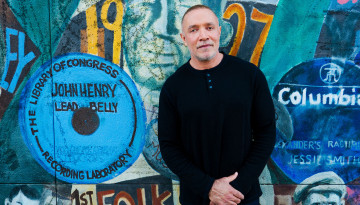
Pulitzer Prize-winning composer Michael Abels, best known for his scores for films by director Jordan Peele, will visit campus March 6-7 for two days of public events and concerts.
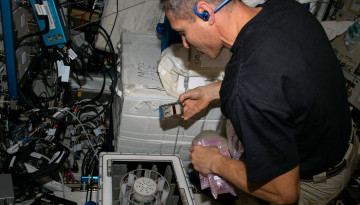
Researchers collaborated to study how those microbes extract platinum group elements from a meteorite in microgravity, with an experiment conducted aboard the International Space Station.
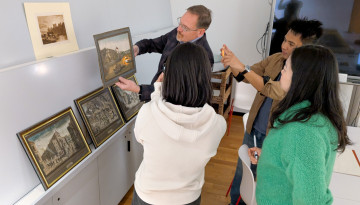
A new student-led installation at the Herbert F. Johnson Museum of Art explores how the figures, known as “staffage,” indicate scale in paintings and also tell larger stories about the art.
The 2026 Newcomb Cleveland Prize from the American Association for the Advancement of Science goes to psychology researchers Gordon Pennycook and David Rand.
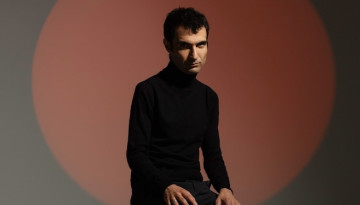
Released on Feb. 6 via Naïve Records, Hamasyan’s album “Manifeste” marks a new chapter for one of the most visionary artists working at the intersection of jazz, progressive rock and global music.
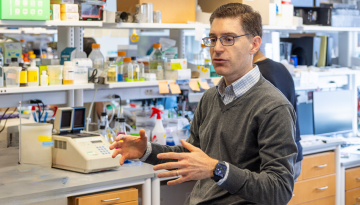
Cornell researchers have discovered a new way cells regulate how they respond to stress, identifying an interaction between two proteins that helps keep a critical cellular recycling system in balance.
The fellowship is designed to prepare students to tackle challenges such as rising health inequities, climate change, distrust in science and emerging infectious diseases.