Students, faculty and staff were recognized for their commitment to diversity, equity and inclusion and excellence within the graduate community at the 2021 Graduate Diversity and Inclusion Awards and Recognition Celebration.
New research from NewYork-Presbyterian and Weill Cornell Medicine identified economic and social conditions impacting individual and group differences in health status, known as social determinants of health.
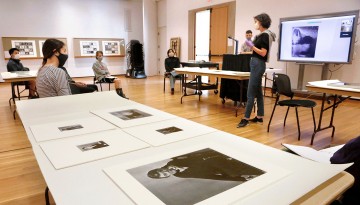
Gifts from retired banking executive Nancy Sukenik will boost the study and appreciation of photography at Cornell through the establishment of a curatorship at Cornell University Library, and a teaching gallery at the Johnson Museum of Art.
Research led by Corinna Loeckenhoff, professor of human development, is the first to show that a sense of increased time pressure caused by “social acceleration” may affect older adults who are no longer working.
Sara Bronin, an incoming faculty member in the College of Architecture, Art and Planning and a leading voice on historic preservation law and related land-use practices, was recently nominated to chair the U.S. Advisory Council on Historic Preservation.
Using a microscope he developed, physicist Séamus Davis and his team have found an exotic state of quantum matter, originally thought to just exist in cuprates, in a more conventional type of material, which could lead to more discovery.
Designing a recycling strategy for a new generation of photovoltaic solar cells will add a strong dose of environmental friendliness to a green industry.