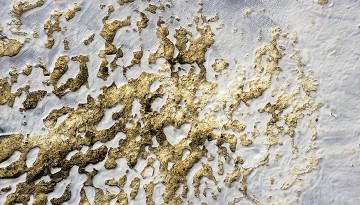
The study suggests male Aedes aegypti mosquitoes make trade-offs between investing energy towards immunity or investing it on traits that impact mating and fitness.
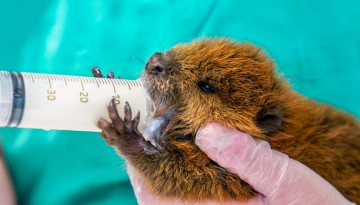
The Cornell Wildlife Hospital helped care for a litter of baby beavers, whose parents were trapped and killed at Lake George in the Adirondacks, nursing three of the surviving five back to health before sending them for rehabilitation.
Student veteran receives annual award honoring the memory of dearly missed Cornell alum Maribel Garcia '95, a vital friend and always a creative, inspiring and energetic member or her community.
The College of Architecture, Art and Planning is represented in several pavilions and events at the prestigious, six-month exhibition, which seeks “a new spatial contract.”
Astronomers have identified 2,034 nearby star-systems – within 326 light-years – that could find life on Earth by watching our pale blue dot cross our sun.
The free app from Cornell Lab of Ornithology identifies the sounds of more than 400 species from the U.S. and Canada, even when multiple birds are singing at the same time.
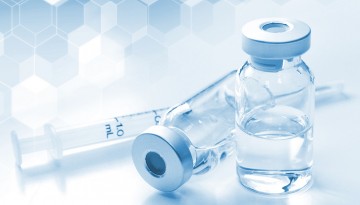
A two-year, $200,000 grant from the USDA and the Extension Foundation to Cornell researchers aims to help promote vaccine confidence and uptake in vulnerable communities in eight New York counties, both upstate and downstate.
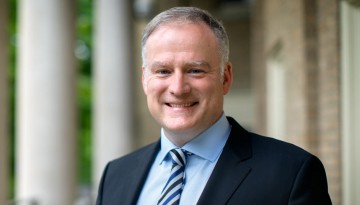
Professor John Cawley has been named the next director of the long-standing Cornell in Washington program, which will also move organizationally into the new Cornell Jeb E. Brooks School of Public Policy as he takes the helm July 1.
Students in this year’s Kessler Fellows cohort have secured summer internship placements and are getting to work contributing to startups across the nation. The program, rooted in the College of Engineering at Cornell University, offers juniors across disciplines the chance to fully immerse themselves in the world of entrepreneurship.