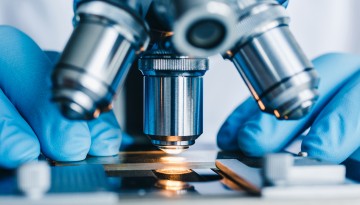
Cornell researchers have developed a method of magneto-thermal imaging that offers nanoscale and picosecond resolution previously available only in synchrotron facilities.
Researchers from Cornell Bowers CIS found no evidence that removing protected student attributes from dropout prediction models improves their accuracy or fairness, but they advocate for including those attributes.
Ivy Goodwin was born about 75 years after the Ivy Room, but they’ll be forever linked in the minds of her parents. The younger one was born earlier this year to Cornell alumni Jill Russo-Goodwin ’09 and Joe Goodwin ’09 MEng ’10, who both have fond memories of burgers at the Ivy Room when they were students.
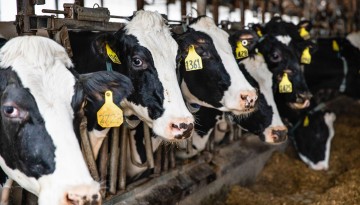
Four undergraduates from New York state who are majoring in animal science each received $20,000 scholarships this past year through the Chobani Scholars Program, to help them achieve their dairy career ambitions across four years of study.
A new podcast hosted by Entrepreneurship at Cornell launched in June, exploring the bold entrepreneurial ideas coming from Cornell students, faculty, staff and young alumni.
The panel, moderated by Noliwe Rooks, discussed ways to steer conversation toward meaningful action, including: listening to scholarly experts; implementing new initiatives; and engaging students and faculty in organizations beyond the university.
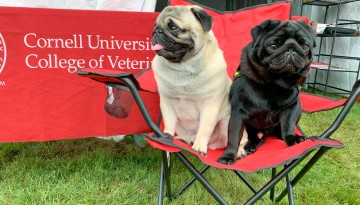
For the third year in a row, veterinarians from the College of Veterinary Medicine provided on-site care for the most elite dogs in the world, at the Westminster Kennel Club Dog Show, June 12-13.
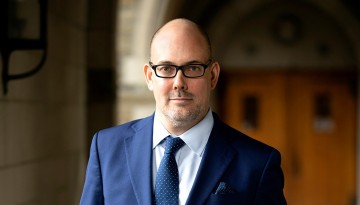
Jens David Ohlin, who has served as interim dean of Cornell Law School since January and as a member of the faculty since 2008, has been named the Allan R. Tessler Dean, effective July 1.