After a strong 30-year relationship, the Vietnam Veterans of America honored Cornell ROTC – the Tri-Service Brigade – with a state-level and national award.
A new study co-authored by Harry Kaiser, the Gellert Family Professor of Applied Economics and Management, finds that even a slight grocery tax-rate increase could lead to food insecurity for many U.S. households.
The student-led initiative invites faculty, staff and students to submit messages of appreciation, with recipients encouraged to find and keep their balloon and message.
Drs. Sohyoung Lee and Abrrey Monreal, postdoctoral researchers in the Department of Microbiology and Immunology, earned research awards for their work in typhoid toxin and peptide therapy research.
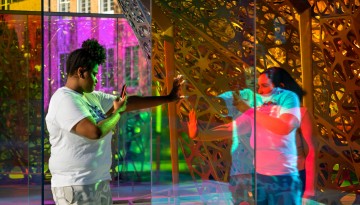
Featuring color-shifting walls and folded stainless-steel modules, the permanent pavilion designed by Jenny Sabin (AAP) and her practice serves as a new gateway to – and symbol of – the interdisciplinary college.
A phase 3 clinical trial of treatment for idiopathic pulmonary fibrosis, sponsored by Weill Cornell Medicine, could pave the way for cheaper studies that are easier to conduct.
A student-led organization that last year formed a diverse coalition of more than 290 organizations was awarded the 26th annual James A. Perkins Prize for Interracial and Intercultural Peace and Harmony during a virtual ceremony May 6.
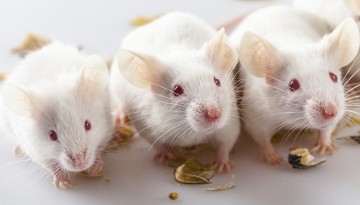
Cornell researchers have developed a technique for revealing how the motor cortex in the brain works – by focusing on a mouse’s tongue when it licks a water spout.
Computer games designed by students in the Game Design Initiative at Cornell will be available for the public to try and critique at the annual Game Design Showcase, to be held virtually from 4-7 p.m. May 25.