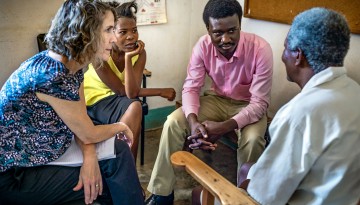
Through the Malawi Resentencing Project, the International Human Rights Clinic and Cornell Center on the Death Penalty Worldwide have helped dozens of death row prisoners win reduced sentences or release.
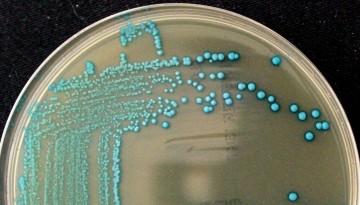
While examining the prevalence of listeriain agricultural soil, Cornell food scientists have stumbled upon five previously unknown and novel relatives of the bacteria.
Cornell is partnering in a $36 million grant from the Toyota Research Institute for its Accelerated Materials Design and Discovery collaborative university research program, which seeks to use artificial intelligence to discover new materials that could help achieve emissions-free driving.
At the virtual Cornell Investment Ideas Forum on May 1, five student teams vied for $1,000 in prize money as they pitched their investment ideas to a panel of industry experts.
The university’s acknowledgment states that the Ithaca campus is located on the traditional homelands of the Gayogo̱hó꞉nǫɁ, also known as the Cayuga Nation.
The College of Arts and Sciences has awarded 14 New Frontier Grants totaling nearly $2 million to faculty members pursuing research projects ranging from the physics of quantum computing to the design of new musical instruments.