Novelist Susan Choi, MFA ’95, whose novel "Trust Fall" won the 2019 National Book Award, will read from her New Yorker story "Flashlight" during a virtual event on April 22.
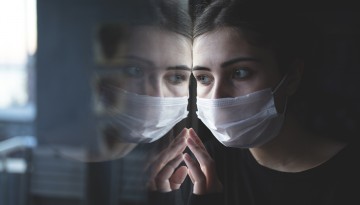
The university is hosting the “Cornell COVID-19 Service of Remembrance,” a virtual event that provides community members an opportunity to mourn losses, Monday, April 19, from noon to 12:45 p.m.
New research led by Jeff Niederdeppe, professor of communication, reveals that increased exposure to televised campaign ads is associated with increased odds of a person being diagnosed with anxiety by a doctor.
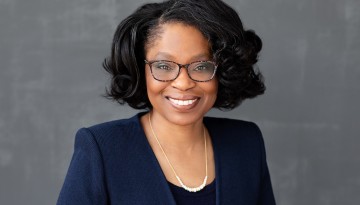
Donica Thomas Varner, vice president, general counsel and secretary at Oberlin College, has been named vice president and general counsel at Cornell. Her appointment was approved April 8 by the Executive Committee of the Board of Trustees.
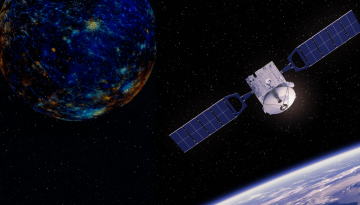
Scientists, technologists and businesses will show how space will be explored in the years to come during the inaugural Space Tech Industry Day, a virtual symposium hosted by Cornell on April 23.
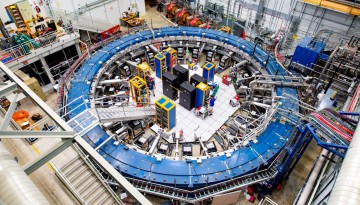
Cornell researchers played a key role in an international collaboration that measured the magnetic field of the elusive subatomic particle known as the muon. Their findings provide strong evidence of an undiscovered type of fundamental physics.
“Asiamnesia,” being presented online April 15-17 by the Department of Performing and Media Arts, explores the stereotypes that plague Asian/Asian American actresses throughout their careers, but also celebrates their versatility and endurance.
The drone-like device “Ingenuity” will face the challenge of flying in an atmosphere only 1% as dense as the Earth’s surface, says Rob Sullivan, a member of the Mars 2020 mission.
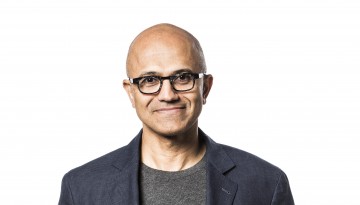
Over 1,000 alumni, students, and Cornell community members tuned in to hear from Microsoft CEO Satya Nadella and Cornell University President Martha E. Pollack on March 24, for the 2021 Hatfield Lecture.