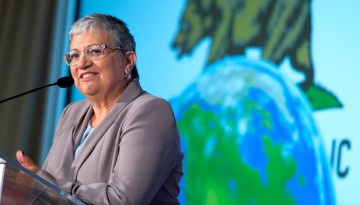
Among her many accomplishments, Angela Winfield, J.D. ’08, associate vice president for inclusion and workforce diversity, led her team in developing the six-part staff training course “Advancing Diversity, Equity and Inclusion at Cornell.”
Supported by a grant from the NIH, researchers from Weill Cornell Medicine and the University of Miami will study ways to use wastewater as an early warning and mapping system for genetic variants of the virus that causes COVID-19.
Barbara Baird, the Horace White Professor of Chemistry and Chemical Biology in the College of Arts and Sciences, has been honored as one of the 2021 Distinguished Women in Chemistry or Chemical Engineering by the International…
Carla P. Gomes, the Ronald and Antonia Nielsen Professor of Computing and Information Science, is the recipient of the 2021 Feigenbaum Prize, given by the Association for the Advancement of Artificial Intelligence.
The College of Engineering’s Kessler Fellows program welcomed 20 new student entrepreneurs to its latest cohort, where they will explore entrepreneurship through academic coursework, mentorship with entrepreneurs and an internship.
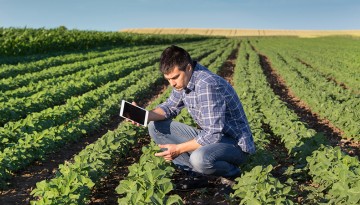
An app that would maximize profit and minimize food spoilage and loss across the agriculture supply chain was named the grand prize winner in the third annual Cornell Institute for Digital Agriculture Hackathon.
A team led by a Boyce Thompson Institute researcher has identified genes enabling peaches and their wild relatives to tolerate stressful conditions – findings that could help the domesticated peach adapt to climate change.