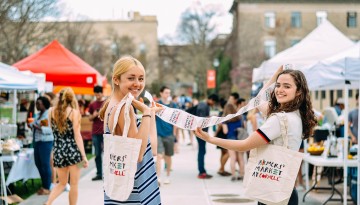
The Association for the Advancement of Sustainability in Higher Education (AASHE) ranked Cornell as a top performer in the 2020 Sustainable Campus Index. See how Cornell compares as one of the top-ranked institutions in the nation for comprehensive sustainability efforts.
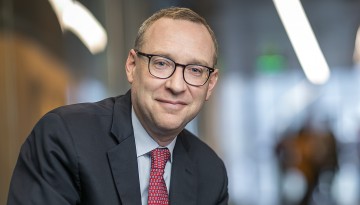
Kevin F. Hallock, the dean of the Cornell SC Johnson College of Business, will depart Cornell this summer to become president of the University of Richmond, effective Aug. 15.
Students examined issues from the logistics of vaccine storage and transportation, to the disinfection of public spaces, and the sanitation and reuse of personal protective equipment.
Charles Petersen, Klarman Postdoctoral Fellow in the College of Arts and Sciences, studies 20th-century American history to better understand the rise of social and economic inequality in recent decades.
According to new research, having college-bound friends increases the likelihood that a student will enroll in college but that effect is diminished for Black and Latino students.
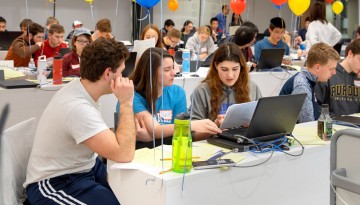
The third annual Cornell High School Programming Contest Warm Up, a virtual computer programming competition, was less a contest and more a chance for budding programmers to hone their skills.
A team of Canadian researchers have been awarded $4.9 million in funding from the Canada Foundation for Innovation to help build a next generation telescope, the Fred Young Submillimeter Telescope (FYST), part of the CCAT-prime project, an international collaboration including Cornell University.
New grants from the Migrations initiative seeks to support work in migrations-related research, pedagogy and engagement with a specific focus on racism and dispossession.
Ijeoma Oluo, author of “Mediocre: The Dangerous Legacy of White Male America,” was the featured speaker at the virtual Martin Luther King Jr. Commemorative Lecture, held March 1.