A $30 million commitment from David R. Atkinson ’60 and Patricia Atkinson will name a new multidisciplinary building on campus, intended to foster innovative and collaborative research in key university priority areas.
Tory Hendry, Tashara Leak and Atieh Moridi are winners of the 2021 awards, which help recipients acquire preliminary data and launch innovative research directions.
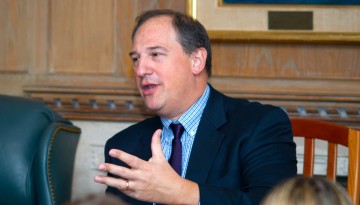
Seth Harris ’83, a visiting professor at the Cornell Institute for Public Affairs, will join the National Economic Council as deputy assistant to the president for labor and economy.
New research from the ILR School shows how technology has further eroded the employer/worker relationship by making it easier to outsource work to temp agencies.
Jeffrey Perry ’89, Ph.D.’ 18, senior lecturer of global development, received the Golden Owl award on Feb. 23 in honor of his contributions to agricultural education in New York state.
Even when grants fund network construction, high operating costs pose significant challenges for rural broadband cooperatives seeking to expand access, according to new research from the Charles H. Dyson School of Applied Economics and Management.
Cornell’s Meejin Yoon and Roberto Sierra have been elected to the American Academy of Arts and Letters, considered the highest artistic recognition in the U.S.