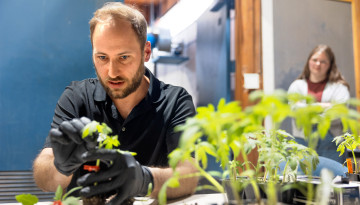
Across 37 counties, Cornell Cooperative Extension master gardeners are growing and evaluating select vegetables to find what grows best in New York state.
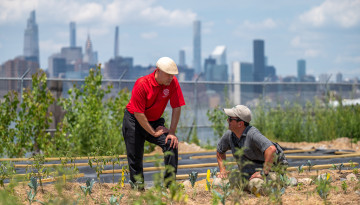
A longtime extension educator and vegetable specialist, Reid will lead Cornell Cooperative Extension's statewide Regional Agriculture Teams, strengthening connections between Cornell research and New York's agricultural communities.
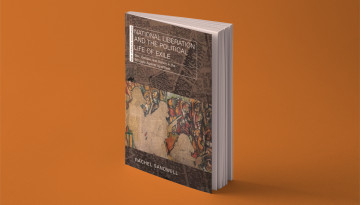
History professor Rachel Sandwell won the Joel Gregory Book Prize for "National Liberation and the Political Life of Exile," her study of women’s leadership in South Africa’s anti-apartheid movement.
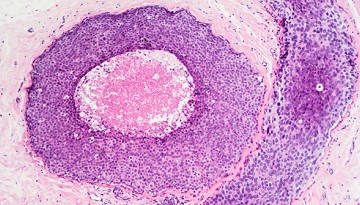
Weill Cornell Medicine has received a three-year, $2.5 million grant from the Department of Defense to develop therapies with fewer side effects for triple-negative breast cancer, one of the most aggressive and difficult-to-treat breast cancers.
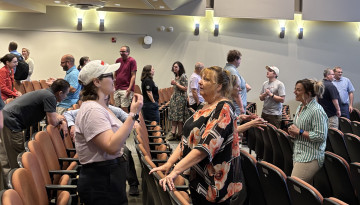
At Cornell's first All-IT Town Hall, university leaders shared their vision for the next chapter of Evolve IT, emphasizing stronger connections, shared opportunities, and a future built on collaboration without losing the local relationships and expertise that make Cornell's Information Technology community successful.
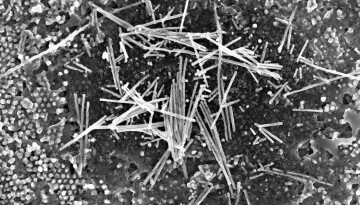
Researchers developed a potential replacement for the tiny copper interconnects in microchips: single-crystal nanowires that become better conductors the thinner they get.
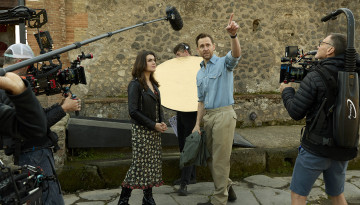
Cornell archaeologist Caitie Barrett helps actor Tom Hiddleston uncover some of the secrets of the daily lives of people who were living in Pompeii when Mount Vesuvius erupted in 79 A.D.
Students and faculty will help the city transform its parks and their care – with new landscaping features and a proposed maintenance plan and governance structure.