The School of Industrial and Labor Relations was founded in 1945 to help resolve labor-management conflict by educating both business and labor leaders.
In a new paper, Cornell researchers introduce a tool they’ve developed to improve the fairness of online rankings without sacrificing their usefulness or relevance.
Ray Jayawardhana, the Harold Tanner Dean of Arts and Sciences and professor of astronomy, has been awarded the 2020 Carl Sagan Medal by the Division for Planetary Sciences of the American Astronomical Society.
Peter McMahon, assistant professor of applied and engineering physics in the College of Engineering, and Brad Ramshaw, the Dick & Dale Reis Johnson Assistant Professor of physics in the College of Arts and Sciences, have been named CIFAR Azrieli Global Scholars.
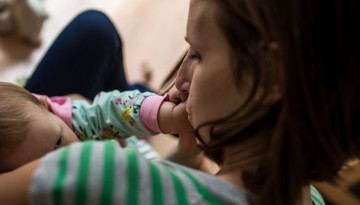
Cornell researchers are leading a review on the risk of coronavirus transmission through breast milk intake and breastfeeding, to inform WHO guidelines during the pandemic.
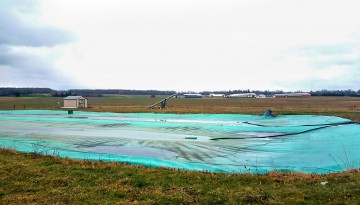
New York agriculture has the capacity to mitigate its own greenhouse gas emissions, two Cornell researchers say in a state-funded report commissioned by the New York State Department of Agriculture and Markets.
The World Economic Forum’s Strategic Intelligence website has tapped Nicholas Mulder, assistant professor of history, to share his expertise in geo-economics.
Cornell is among 21 higher-education institutions in New York submitting a collaborative request for proposals to purchase renewable electric energy from sources built over the next 2 ½ years in New York state.