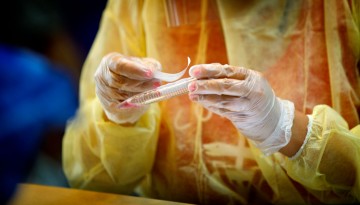
Tests to date of more than 4,000 students, faculty and staff show a very low prevalence of COVID-19 as Cornell prepares to test thousands of returning students.
Despite weak constitutional checks and balances, public opinion represents a powerful check on presidents’ willingness to act unilaterally, according to a new book co-authored by Douglas Kriner.
Cornell has secured a U.S. Department of Energy grant, expected to total about $7.2 million, which will fund exploratory research to help verify the feasibility of using a novel geothermal energy system to heat its campus buildings.
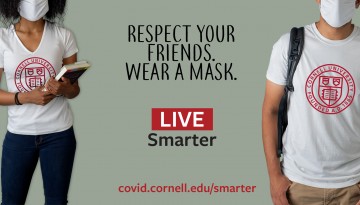
The campaign will reinforce the behaviors returning students, faculty and staff must practice to help prevent spread of COVID-19 this fall, including wearing face coverings, physical distancing and good hand hygiene.
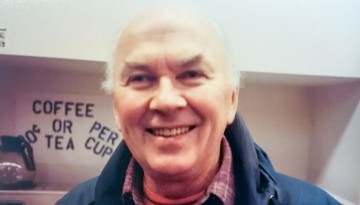
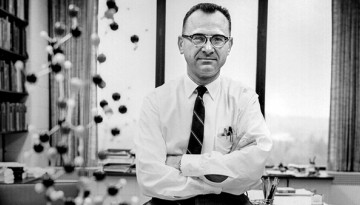
Harold A. Scheraga, the George W. and Grace L. Todd Professor Emeritus of Chemistry in the College of Arts and Sciences, who had a profound impact shaping the understanding of protein structure, died Aug. 1 in Ithaca. He was 98.
As a consequence of missing data on tests for COVID-19 infection and imperfect accuracy of tests, reported rates of cumulative population infection are lower than actual rates of infection.
The Cornell Student Behavioral Compact requires all students to abide by strict public health guidelines and participate in mandatory testing to help protect the campus and Tompkins County communities during the pandemic.
In a message to students on the Ithaca campus, Vice President Ryan Lombardi outlined the components in the new compact, which they will complete before they can enroll in classes.