Cornell President Martha E. Pollack and Provost Michael I. Kotlikoff are playing a vital role in helping New York state plan for reopening safely as the COVID-19 pandemic eases.
During this time of social distancing and university life interrupted by the ongoing coronavirus (COVID-19) outbreak, the Chronicle offers a variety of opportunities to engage with online Cornell resources and programming.
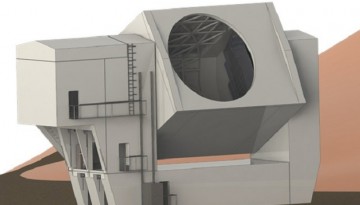
Due to the COVID-19 pandemic, the inaugural CCAT-prime telescope collaboration meeting, April 7, was switched to a virtual gathering, but science regarding the project advanced.
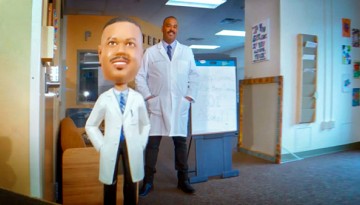
Dr. John Clarke, director of occupational medicine at Cornell Health, writes, produces and performs rap music on health-related topics, most recently coronavirus.
In addition to its natural splendor, Cornell Botanic Gardens now boasts an outdoor art installation: a two-story mural, created in September 2019 by Brazilian street artist Eder Muniz.
The next generation of Earth- and space-based telescopes will be able to hunt distant solar systems for evidence of life on Earth-like exoplanets, thanks to a new spectral field guide.
Miguel Gómez, an expert on food markets and supply chains, says food supply chains must become more flexible so that goods can be more easily directed to either supermarkets or food service establishments, wherever the need is greatest.