The Genomic and Open-source Breeding Informatics Initiative, operating under an $18.5 million grant from the Bill & Melinda Gates Foundation, is working to develop new plant-breeding tools and genomic databases.
In a special climate change issue of the Review of Financial Studies, nine new research papers – including two from Cornell – have staked new territory for scholarly study: finance sustainability.
A research tracker created by Nathan Matias, assistant professor of communication, has helped foster collaboration among social scientists responding to the COVID-19 pandemic.
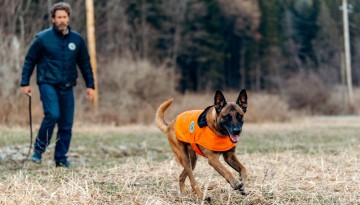
Dogs have highly sensitive noses, a trait environmental conservationists, land managers and plant disease specialists are harnessing to sniff out invasive species.
Applications are now open for Year 2 of Grow-NY, the food and agriculture business competition administered by Cornell's Center for Regional Economic Advancement and funded by Empire State Development.
Students in the Samuel Curtis Johnson Graduate School of Management have found fun, interesting and valuable ways to make the most of physical distancing by creating new ways to engage.
Mathematical modeling by Weill Cornell Medicine is helping to guide New York state and New York City leaders as they make decisions that could affect the trajectory of the COVID-19 pandemic.