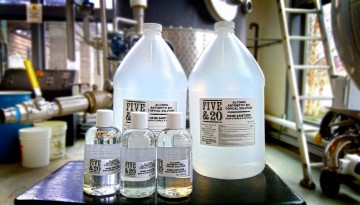
In the battle to keep workers safe during the COVID-19 pandemic, nearly 40 craft distilleries in New York state have turned to making hand sanitizer with guidance from Cornell AgriTech.
Transdiagnostic processes, which are subtle ways that people think, act and cope, help explain why mental health problems become more common in girls as they reach puberty, according to new Cornell research.
A biomanufacturing company spun out of Cornell research is seeking to rapidly translate an antibody therapy against COVID-19 by using cell-free biotechnology based on glycoengineered bacteria.
Reliance on scientific reasoning, cross-disciplinary collaboration and long research paths are three traits often leading to “big-leap” inventions, a new Cornell study has found.
As Cornell’s Ithaca campus readies for its first day of virtual instruction April 6, the Chronicle spoke with university leaders about their perspectives on this altered landscape.
The coronavirus pandemic has challenged Cornell students, as they’ve waited for online instruction to begin April 6. But many are responding with resilience, staying sharp and taking care of others, and themselves.
In a virtual forum sponsored by the Employee Assembly, university leaders said recent steps to contain costs sought to preserve jobs while addressing shortfalls prompted by the COVID-19 pandemic.
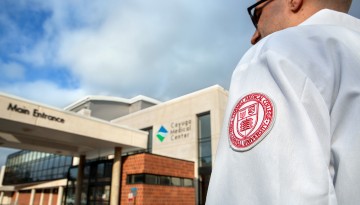
Two professors have spearheaded a project to get donated tablet computers to patients at Cayuga Medical Center who are isolated from loved ones because of COVID-19.
As Cornell University Library’s physical spaces remain temporarily closed to mitigate the spread of COVID-19, librarians are opening digital doors for Cornell’s community of scholars.