Students who used immersive virtual reality did not learn significantly better than those who used two more traditional forms of learning, a new Cornell study has found.
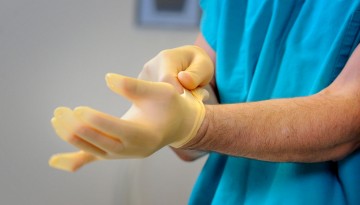
As hospitals across the country try to manage a surge in coronavirus patients while also facing a global shortage in the protective gear needed to treat them, the Cornell community has banded together to donate crucial medical supplies to local health care providers.
People who tend to recognize similarities between people they know and people depicted in the media are more likely to believe common myths about sexual assault, according to Cornell research.
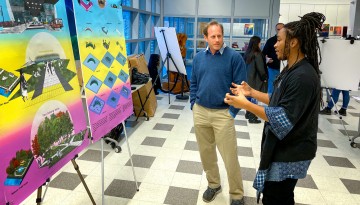
Cornell graduate students studying landscape architecture examined Ossining, New York – a town on the rising Hudson River last fall, and presented ideas for climate-change adaptation.
Doctoral student Benedetta Luciana Sara Carnaghi didn’t have to wait long to retrieve her research material and continue her work, thanks to a double-time effort by Cornell University Library staff.
James Morin, professor emeritus, co-discovered a new species of Caribbean ostracod nicknamed the “Star of the Sea” seed shrimp, which uses its bioluminescence as both a defense mechanism and for courtship.
Nick Admussen, associate professor of Asian studies in the College of Arts and Sciences, has translated into English selections of Ya Shi’s poetry in the newly published “Floral Mutter.”
Cornell President Martha E. Pollack confirmed on March 20 that two members of the Ithaca campus community have tested positive for the COVID-19 coronavirus.