An international collective of scientists gathered at Cornell to discuss collecting research data from the proposed Earth Source Heat test well in Snee Hall, Jan. 8-10.
The World Organization for Early Childhood Education has appointed Kimberly Kopko, Ph.D. ’05, associate director of extension and outreach in the College of Human Ecology, to represent it at the United Nations.
Professor of practice Jon McKenzie is helping area students see the possibilities in making media, from info comics to video, to tell stories about real issues in their lives and in their communities.
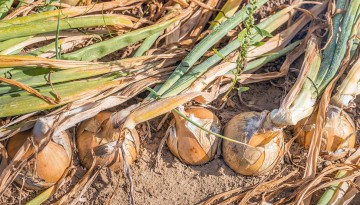
Cornell AgriTech researchers are tackling a form of onion leaf blight that recently has affected 75% of New York state onion crops, a $44.7 million industry.
Even short stays in solitary confinement appear linked to a higher risk of death after inmates are released from jail or prison, according to new research by Christopher Wildeman, professor of policy analysis and management.
Frank H.T. Rhodes, Cornell University’s ninth president, a national figure in higher education and an esteemed paleontologist, died Feb. 3 in Bonita Springs, Florida. He was 93.
With the transition to the Canvas Learning Management System complete, faculty and the Canvas team are to exploring advanced features and tools to further enhance student learning.
Seventy-five years after the liberation of the Auschwitz concentration camp, close to 200 people gathered in Ithaca to explore the continuing question of the role moral courage plays in confronting hate.
Ryan Lombardi, vice president for student and campus life, and Sharon McMullen, assistant vice president of student and campus life for health and wellbeing, issued a statement Feb. 3 updating the Cornell community on developments regarding the Novel Coronavirus.