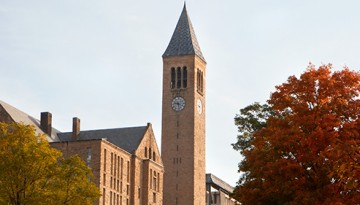
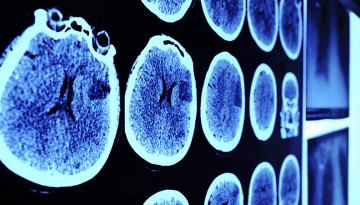
Shaoyi Jiang, Ph.D. ’93, has been named the first Robert S. Langer ’70 Family and Friends Professor at Cornell. Jiang’s wife, Qiuming Yu, Ph.D. ’95, also will join the Cornell faculty.
As the impeachment trial of President Donald Trump unfolds in the U.S. Senate, two Cornell professors offered their perspectives on the event and what it says about the current state of American politics.
Lance Collins, the Joseph Silbert Dean of Engineering, will join Virginia Tech as the inaugural vice president and executive director of its new Innovation Campus, following completion of his second term as dean June 30.
Unprocessed red meat and processed meat consumption leads to a slightly higher risk of heart disease and premature death, according to a new study from researchers at Cornell and Northwestern University.
Most big cities are well below their ideal density of grocery stores that would minimize food waste, according to a study by Elena Belavina, associate professor in the School of Hotel Administration.
Maria Cristina Garcia, from the College of Arts and Sciences, and Anthony Burrow, from the College of Human Ecology, have won the inaugural Faculty Award for Excellence in Research, Teaching and Service Through Diversity.
Cornell events include an adventure film festival and Oscar-nominated shorts; adaptive rock climbing; a reading by Emily Fridlund and Joanie Mackowski; and an exhibition featuring campus voices on goodness, gratitude and belonging.
Cornell Engineering has announced winners of its Scale-Up and Prototyping Awards, which give teams of engineering faculty and students up to $40,000 to commercialize startup technologies.
Researchers from Weill Cornell Medicine report immune cell activity in the brain differs between males and females in ways that may explain why some neurodegenerative diseases affect the sexes differently.