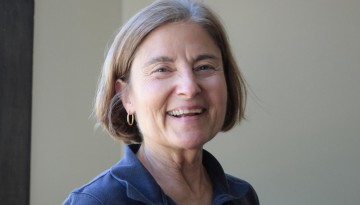
The inaugural event in the Kenneth A.R. Kennedy Lecture in Human Evolution series will be April 9 and will feature Cynthia Beall, professor of anthropology at Case Western Reserve University.
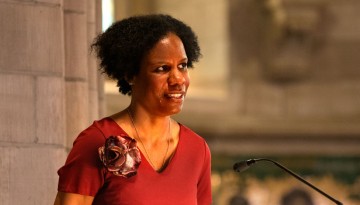
At the March 28 Soup & Hope, associate professor of African-American literature Riché Richardson recounted how surgeries and faith taught her to live life to the fullest.
Physicist John Preskill will explain quantum entanglement, and why it makes quantum information unique, in the spring Hans Bethe Lecture, April 10 in Schwartz Auditorium, Rockefeller Hall.
Cornell researchers have discovered a way to accelerate photons using four orders of magnitude less energy than existing methods, paving the way for ultraviolet lasers that can capture processes lasting a quintillionth of a second.
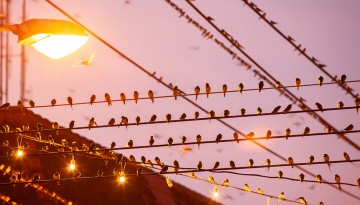
An estimated 600 million birds die from building collisions every year in the U.S., and research from the Cornell Lab of Ornithology offers one explanation for it: a combination of light pollution and geography.
Starting this fall, all incoming students in the College of Arts and Sciences will meet weekly in small groups with a faculty member to help make their transition to college life easier.
Richard Adie, managing director of Cornell University’s Statler Hotel from 2002 until his retirement in 2018, received the Howard Cogan Tourism Award from the Tompkins County Chamber of Commerce March 28.
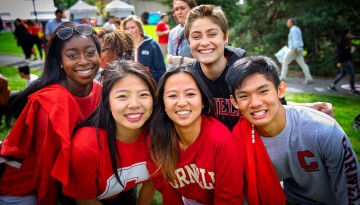
Cornell received more than 49,000 applications and admitted a total of 5,183 students, including early admission candidates, bringing its overall admission rate to 10.6 percent.
The fourth annual Cornell University Regional Town-Gown Conference, held March 26, focused on the logistics and challenges of transportation, or getting people and things where they need to go.