Cornell researchers have discovered five new species of a group of bacteria called Listeria – including one named for Cornell, providing new insights that could lead to better ways to detect the soil bacteria in food.
The first study on vitamin D status and congestive heart failure in dogs suggests the same that vitamin D deficiency may be a risk factor for congestive heart failure in canines.
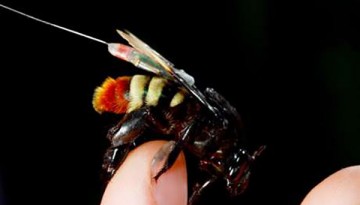
By looking at how past climate changes may have affected orchid bees, Cornell researchers make predictions of how these forest bees might respond to future climate changes.
Robin Davisson looks back on her time at Cornell, and forward to new opportunities, as she and husband Cornell President David Skorton prepare to move in 2015.
With so few available academic jobs, Cornell will start a NIH-funded pilot program to help train life sciences graduate students and postdocs for nonacademic positions. A kickoff event is March 18.
Cornell is part of a new, multistate, $3 million U.S. Department of Agriculture grant to better understand how selectively breeding their herds to encourage milk production is reducing their fertility.
Literally digging up the dirt, Cornell researchers have found that burgeoning deer populations forever alters a forest’s natural future by disrupting the soil’s seed banks.