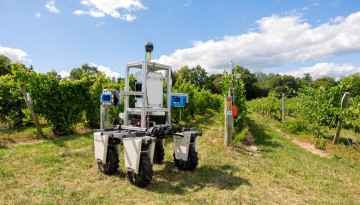
The development of the robot is critical as managing such diseases as powdery and downy mildews in vineyards is the top concern for grape growers and viticulturists.
Helping to combat the rising threat of antibiotic resistance, Cornell biologists have identified a surprising mechanism that weakens bacteria from within—an insight that could guide the next generation of antibiotics as drug resistance rises worldwide.
The Employee Assembly presented the award to Adrienne Mason, the administrative director for two departments in the College of Agriculture and Life Sciences, on Aug.29.
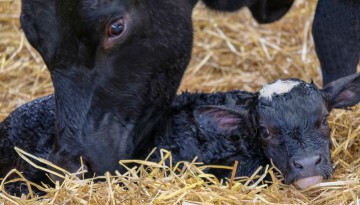
Cornell researchers have uncovered the genetic triggers that cause male and female bovine embryos to develop differently, as early as seven to eight days after fertilization.
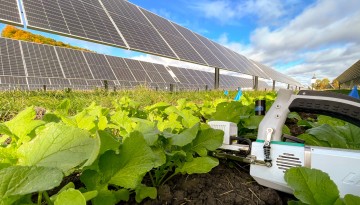
A series of studies by Cornell researchers is testing how crops might grow when planted between rows of solar panels on a solar farm in New York state.
The findings could lead to aquatic plant management strategies that help mitigate the release of gases such as methane, carbon dioxide and nitrous oxide.
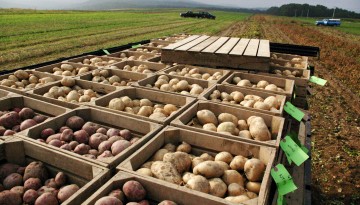
Cornell's 160-year-old potato breeding program supports the national potato industry, working hand-in-hand to develop new varieties grown across the country.