Warmer temps push tropical birds up and off mountains

Many tropical mountain birds are shifting their ranges upslope to escape warmer temperatures, but tropical species appear to be more sensitive to climate shifts than species from temperate regions.

Pathogen-testing firm keys into McGovern Center

With door keys in hand and research ready for a scientific bench, startup business Ionica Sciences became the newest tenant Feb. 5 at Cornell's Kevin M. McGovern Family Center for Venture Development in the Life Sciences.

Citizen science helps bridge research gap

Cornell Lab of Ornithology researcher Caren Cooper gave a presentation, “Citizens of Science: When Advances are Powered by Crowds,” at the American Association for the Advancement of Science annual meeting in Chicago, Feb. 16.

Cornell-led collaboration seeks marine disease solutions

A group of Cornell professors from a range of fields is collaborating to better understand and remediate the impact of warming oceans.

Sea star wasting devastates Pacific Coast species

Cornell researchers are looking into the cause of an unprecedented die-off of West Coast sea star species from Alaska to Mexico.

New institute focuses on human brain research

The new Human Neuroscience Institute aims to better understand how brain systems drive cognition and behavior, which could ultimately enable people to lead happier and more fulfilling lives.

Torres trains international veterinarians with USDA

Veterinarian Alfonso Torres is co-leading the charge to increase the number of veterinarians around the world who are familiar with animal diseases that could threaten the health of livestock and poultry globally.

Sperm finding could improve fertility, contraceptives

A new study finds that a component of the sperm membrane tightly controls a crucial step in fertilization, making it a prime target for efforts to either assist fertilization or prevent it.

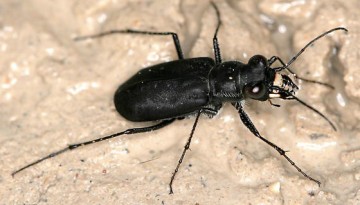
Speedy tiger beetles use antennae to 'see' while running

Cornell researchers have discovered that tiger beetles use their antennae to mechanically sense their environments and avoid obstacles while running at blinding speeds.