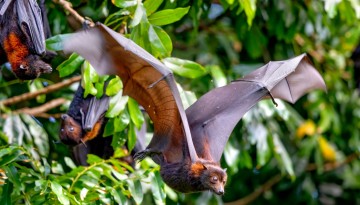
When bats lose access to their habitat and natural food sources, they seek food on agricultural lands - new research explains why, when their diets change, they shed more virus and infect more hosts, increasing the risk of outbreaks and pandemics.
A new study using the largest network of microphones to track birds in the United States is providing crucial insights for managing and restoring fire-prone forests across California’s Sierra Nevada region.
William Boyle ’55, MBA ’56, has given a significant gift to the College of Agriculture and Life Sciences (CALS) to support renovations to the Plant Science Building.
Researchers identified several families of "jumping genes," or transposons, in cyanobacteria and Streptomyces that can find and insert themselves at the telomere, with benefits for the transposon and their bacterial host.
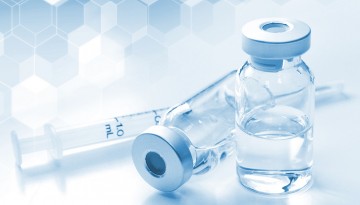
The new platform, which provided 100% protection from influenza and COVID-19 in mouse models, could vastly improve vaccine administration and the efficacy of the current flu vaccine.
At their spring banquet, students in the Robert S. Harrison College Scholar Program hear from a speaker who helps foster creative and critical thinking skills.
Dr. Craig Altier and Colin Parrish, Ph.D. ’84, both of the College of Veterinary Medicine, have been elected to the American Academy of Microbiology, the honorific leadership group within the American Society for Microbiology.
Cornell AES manages farms and greenhouses that support research but are also unique teaching tools for over 40 courses. This is the fifth story in a series about on-farm teaching; summer internships offer undergraduates immersive learning experiences.