Four Cornell researchers were chosen from a competitive, global application pool to receive Bezos Earth Fund awards to use AI to address climate change and nature loss.
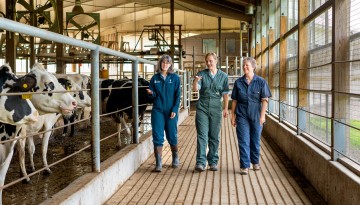
Researchers have developed tests to assess low-level or chronic inflammation in dairy cattle that they hope will improve animal health and support New York’s food supply.
Three innovative approaches to treating infections, fighting cancer, and enhancing the body’s immune system have been selected for funding through the Cornell Center for Immunology's 2025 Multidisciplinary Seed Grants.
A computer model analysis showed that global adoption of regenerative farming practices to improve soil health can benefit either greenhouse gas mitigation or crop yields but rarely both.
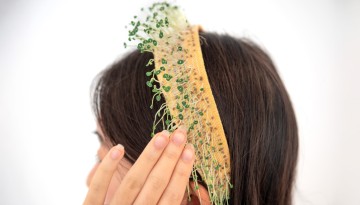
Researchers in the College of Human Ecology have developed a design and fabrication approach that treats plants as companions to humans, with seeds woven into hydrogel material for apparel and other applications.
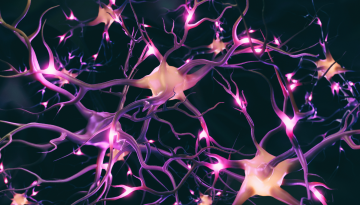
A team of researchers at Cornell University have made a discovery in fruit flies that could change the way we understand brain diseases like Alzheimer’s and Parkinson’s in humans.
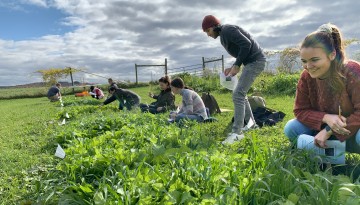
Cornell AES manages farms and greenhouses that support research but are also unique teaching resources for over 40 courses. This is the sixth story in a series about on-farm teaching; in Cover Crops in Agroecosystems, students explore the uses of cover crops and assess their benefits.
Humans have bred pug dogs and Persian cats to evolve with very similar skulls and “smushed” faces, so they’re more similar to each other than they are to most other dogs or cats.