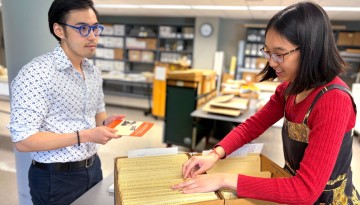
The history of labor organizations and worker issues in China is the focus of “Keywords of Chinese Labor: An Exhibition,” opening this month in an art gallery in Brooklyn. The exhibition will include daily guided tours and events.
Climate Week NYC will get a Big Red tint as Cornell researchers suggest carbon solutions for the travel industry, discuss agricultural methane and participate in a nuclear energy conference.
The Fall 2024 Scientific Computing Training Series begins October 2, featuring five webinars on Python, JupyterLab, and R, aimed at enhancing research services and scientific collaboration across all Cornell campuses.
The Communal eXtended-Reality (CXR) system is a cutting-edge blend of the physical and digital worlds in which virtual scenes are overlaid onto the real world, designed to engage communities in new ways.
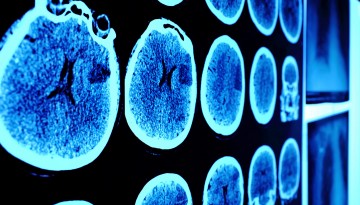
By repeatedly scanning the brains of a small group of patients for a year and a half, Weill Cornell Medicine researchers have identified a distinct pattern of neuronal interactions that appears to predispose some people to developing depression.
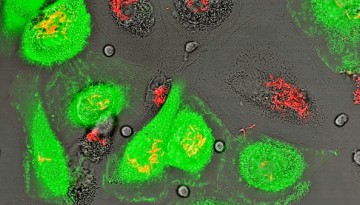
Research at Weill Cornell Medicine suggests that childhood immunization against HIV could one day provide protection before risk of contracting the potentially fatal infection dramatically increases in adolescence.
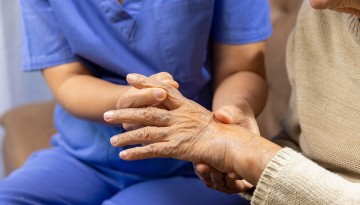
The study shows that artificial intelligence and machine learning technologies can effectively and efficiently subtype pathology samples from patients with rheumatoid arthritis.
Researchers studying artificial intelligence training data and treatment of swelling linked to breast cancer are among the eight Cornell assistant professors who recently received National Science Foundation Faculty Early Career Development Awards.