Grants awarded recently by the Cornell Center for Social Sciences seeded research projects on topics ranging from COVID-19 and policing to clean energy and product design, led by scholars from across the university.
President Martha E. Pollack applauds the legacy of Ann S. Bowers ’59 and her gift that creates the Cornell Ann S. Bowers College of Computing and Information Science.
By delving into scientific and economic data, Cornell engineers have examined whether New York could achieve a statewide carbon-neutral economy by 2050. Their finding: Yes – and with five years to spare.
The Criminal Justice and Employment Initiative in November held the first two of four scheduled live online educational trainings for the Port Authority of New York and New Jersey’s Office of Second Chance Employment.
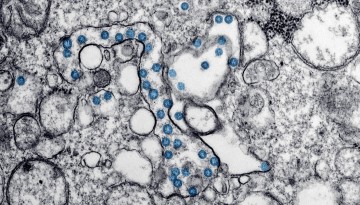
A Cornell-led COVID-19 patient registry, organized by Weill Cornell Medicine, continues to be a source of medical insight into the workings of the novel coronavirus and treatment of infected patients.
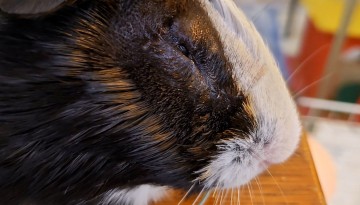
Odin the guinea pig, who a local family adopted from the SPCA of Tompkins County, suffered from eyelid agenesis but doctors at the Cornell University Hospital for Animals performed two surgeries and he’s fully recovered.
Space travel, illnesses like COVID-19 and climbing Mount Everest can trigger the body’s stress response systems in similar ways, according to new studies by Weill Cornell Medicine, space agencies and other investigators.
Employing an innovative research method that used smartphones to collect location and real-time survey data, sociologist Erin York Cornwell examined how everyday social environments may contribute to short- and long-term health changes.